
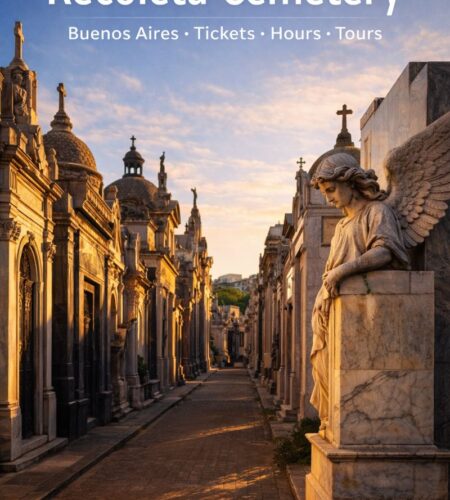
Recoleta Cemetery Buenos Aires is one of the city’s most iconic “open-air museums”: a maze of mausoleums, sculptures, and family vaults where you can literally walk through Argentina’s history. It’s also a very practical stop for travelers—easy to reach, doable in 60–120 minutes, and surrounded by classic Recoleta sights.
📍 Location: Junín 1760, Recoleta, Buenos Aires.
Why Recoleta Cemetery Buenos Aires is worth your time ✅
Recoleta isn’t “just a cemetery.” It’s famous for:
- Architecture & art: ornate vaults and mausoleums (many are protected as national heritage).
- Historic figures: tombs of presidents, Nobel laureates, writers, and national icons (including Eva Duarte de Perón).
- A compact visit: you can cover the key sections fast if you follow a simple route.
Quick reality check: it’s a living heritage site, so expect rules, security, and (for some visitors) paid entry.
What to see inside Recoleta Cemetery Buenos Aires 📍
If you only have 60–90 minutes, prioritize these:
1) Iconic tombs & personalities
On official guided routes and city info, you’ll see mentions of well-known names like:
- Eva Duarte de Perón
- Domingo F. Sarmiento
- Raúl Alfonsín
- Luis Federico Leloir
- Julio A. Roca
- and more.
2) The “city of vaults” vibe
Recoleta was created in 1822 as the first public cemetery in the city, with its layout credited to French engineer Próspero Catelin.
That’s why the place feels like a miniature city—“streets,” corners, little facades, stained glass, and sculptures everywhere.
3) Photo spots (without being disrespectful) 📸
- Wide “avenue-like” paths with repeating mausoleum facades
- Angel statues and dramatic stairways
- Light-and-shadow corridors in late afternoon
⚠️ Tip: keep your camera close and don’t block walkways—Recoleta can get crowded.
How to get there 🚇 🚌 🚖
By subway (Subte) — easiest for most travelers 🚇
Recoleta is in the Recoleta neighborhood, close to major Subte corridors. The most useful options:
- Line H: stations include Las Heras and Facultad de Derecho.
- Line D: stations include Pueyrredón and Callao (popular if you’re coming from Palermo / downtown).
From these stations, plan on a 10–20 minute walk depending on your exact exit and pace (Recoleta is very walkable).
🕒 Subte service typically starts 5:30 (Mon–Fri), 6:00 (Sat), 8:00 (Sun/holidays).
By bus 🚌
City buses run everywhere in Recoleta. If you’re paying fares, SUBE is the standard card used across public transport.
Hop-on/hop-off tourist bus 🚌
If you’re sightseeing-heavy, the official tourism site lists the tourist bus operating daily (typically 9:00–20:00 depending on route), and Recoleta is one of the classic neighborhoods served.
Taxi / ride apps 🚖
Good option if:
- it’s very hot / raining
- you’re visiting early with a tight schedule
- you want direct drop-off at Junín 1760
Recoleta Cemetery Buenos Aires hours ⏱️
For tourist visits, Buenos Aires City information lists:
- Daily: 9:00–17:00
✅ Plan to arrive before 15:30 if you want time for photos + finding specific tombs without rushing.
Recoleta Cemetery Buenos Aires tickets & prices 💳
Here’s the official structure you should expect:
- Residents (Argentina): free entry (official city communications state free access for national residents).
- Foreign visitors: Buenos Aires City reported an entry fee of ARS 8,270 (as published in June 2024).
⚠️ Important: prices in Argentina can change often. The City directs tourists to official ticketing/entry guidance (linked from the city’s cemetery info). If you want the “right-now” number, check the current official listing before you go.
👶 Rule to know: tourists under 18 must enter with an adult.
Free guided tours (official) 🗣️
Buenos Aires City runs free guided tours in Spanish starting from the main entrance (Junín 1760).
Published schedules include:
- Mon–Fri: roughly 10:00–16:00
- Weekends & holidays: roughly 9:00–16:00
✅ If you want the best experience with zero stress, do this:
- arrive ~15 minutes early
- join the next tour at the entrance
- after the tour, wander 20 minutes for photos
Best visit plan (60, 90, or 120 minutes) ✅
⏱️ 60 minutes (quick highlights)
- Enter → grab a simple map/photo of the layout
- Go straight to the most famous tombs (ask staff/guide)
- Walk one main loop back toward the exit
⏱️ 90 minutes (best balance)
- Join a guided tour (or follow the main paths)
- Add 15–20 minutes for “side streets” with the best sculptures
- Quick break outside at Plaza Francia area
⏱️ 120 minutes (slow & detailed)
- Guided tour + independent exploration
- Focus on architecture styles + inscriptions
- Extra time for finding specific figures mentioned in your guidebook
Tips & common mistakes ⚠️
Do this ✅
- Go early (cooler, fewer crowds).
- Bring cash + card just in case (ticketing/payment can vary).
- Use a guided tour if you care about history beyond photos.
- Wear comfortable shoes—paths are uneven in places.
Avoid this ⚠️
- Arriving too late (17:00 end time comes fast).
- Treating it like a theme park—keep voices low and be respectful.
- Assuming it’s free for everyone (there is an official fee for foreign visitors, published by the city).
FAQ: Recoleta Cemetery Buenos Aires
Is Recoleta Cemetery Buenos Aires free?
Official city info indicates free entry for national residents, while foreign visitors pay an entry fee (published by the city; verify current price before you go).
What are the official opening hours?
Tourist visiting hours are listed as 9:00–17:00 daily.
Are there guided tours?
Yes—Buenos Aires City publishes free guided tours in Spanish, with schedules varying by weekday vs weekend/holiday.
Is it safe to visit?
Recoleta is a well-visited tourist area. Use normal city awareness (phone in pocket, avoid flashing cash).
How long do I need?
Most visitors enjoy it in 60–120 minutes depending on whether they do a tour and how many tombs they want to find.
Conclusion
Recoleta Cemetery Buenos Aires is one of those rare places that’s both visually stunning and culturally meaningful. If you plan your timing (arrive early), choose the right transport (Subte Line H is the simplest), and consider the free guided tour, you’ll get a high-impact Buenos Aires experience in under two hours—without rushing.
Comments