
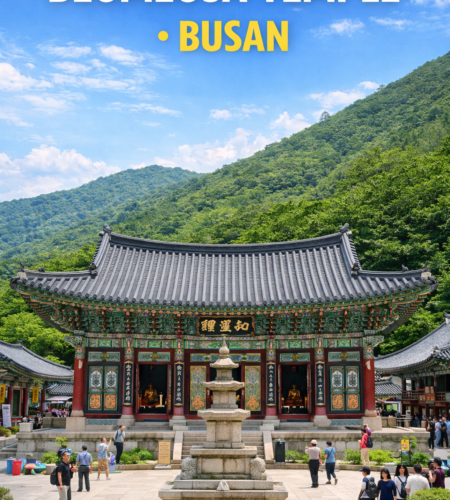
Beomeosa Temple is one of Busan’s most important Buddhist temples—set on the forested slopes of Geumjeongsan Mountain, far from the coastal crowds but still easy to reach by subway + bus. Beomeosa Temple is open year-round, has free entry, and is known for its long history (dating back to 678) and cultural heritage buildings like Daeungjeon Hall.
If you want a Busan experience that feels calm, local, and deeply Korean—without needing a full-day trip—this is the one.
Beomeosa Temple at a glance ✅
| What | Details |
|---|---|
| 📍 Address | 250, Beomeosa-ro, Geumjeong-gu, Busan |
| ⏱️ Hours | Daily 08:00–17:00 |
| 💳 Admission | Free (no entrance fee) |
| ☎️ Phone | +82-51-508-3122 |
| 🌿 Setting | Slopes of Geumjeongsan Mountain |
Why Beomeosa Temple is worth visiting 🌿
1) It’s one of the “must-know” temples in Busan
Visit Busan highlights Beomeosa Temple as a major local attraction and provides official visitor basics (address, hours, transit).
2) Real cultural heritage, not a staged attraction
Daeungjeon Hall is recognized as an important cultural heritage structure (listed as Treasure No. 434 in official heritage information).
3) You can experience temple life (Templestay)
Beomeosa runs official Templestay programs through Korea’s Templestay network (the official platform used for reservations and program info).
A quick history of Beomeosa Temple 🏛️
Beomeosa Temple was built during the Silla period in 678, and it has long been considered a historic site known for producing respected monks.
Today, it is also described as a head temple of the Jogye Order of Korean Buddhism.
If you’re not a “temple person,” this history still matters because it explains why the architecture and layout feel authentic—this is a living religious complex with deep roots, not a modern reconstruction designed for visitors.
What to see at Beomeosa Temple 📸
Cheonwangmun Gate (Gate of the Four Heavenly Kings) 👹
This gate is famously associated with guardian figures and marks a psychological “threshold” into temple space. (It’s often one of the most photographed spots.) A Wikimedia Commons file description notes it as Beomeosa’s second gate and provides historical context about the gate.
Daeungjeon Hall (Main Buddha Hall) ✨
Daeungjeon Hall of Beomeosa is documented in official cultural heritage records, including a description of its distinct enshrined statue arrangement (different from many other Daeungjeon halls).
Visit Busan also points out notable interior features and highlights nationally designated treasures associated with the hall’s religious art.
Temple atmosphere + forest setting 🌲
Beomeosa sits in the Geumjeongsan landscape, which is a big part of the experience—cooler air, wooded paths, and a “mountain temple” feel even though you’re still inside Busan city limits.
How to get there 🚇🚌 (easy, official route)
The most straightforward route is subway + bus:
Option A (official and simple) ✅
- Take Busan Metro Line 1 to Beomeosa Station
- Exit 5 or 7
- Transfer to Bus 90
- Get off at Beomeosa Parking Lot
Parking: available at the Beomeosa Temple parking lot (paid).
Option B (Templestay-specific directions) 🧘
Visit Busan also provides separate transit notes for reaching the Beomeosa Templestay building (it’s described as located outside the main temple area).
Hours / Operating times ⏱️
Beomeosa Temple’s official visitor info (via tourism listings) consistently states:
- Every day: 08:00–17:00
- Open all year round
🟡 Tip: Arrive earlier in the day if you want fewer people and softer light for photos.
Tickets / prices / cards 💳
Admission is free.
Busan City has also publicly communicated the move to abolish the admission fee at Beomeosa (and notes it was previously a small fee), supporting the “free entry” status shown in current tourism listings.
What you might pay for:
- 🚗 Parking (if driving)
- 🍵 Optional temple-related items/donations (voluntary)
- 🧘 Templestay program fees (if you book a stay)
Practical tips (and common mistakes) ✅⚠️
Dress + behavior basics 👕
- ✅ Wear modest clothing (covered shoulders/legs is safest).
- ✅ Keep voices low—people may be praying or meditating.
- ⚠️ Don’t step into halls with shoes on (follow posted signs).
Photo etiquette 📷
- ✅ Courtyards are usually fine for photos.
- ⚠️ Inside halls: treat it as a sacred space—avoid flash, and follow any signs.
Timing hacks ⏱️
- ✅ Go on a weekday morning for the calmest visit.
- ⚠️ Don’t arrive close to closing (you’ll feel rushed, and some areas may quiet down).
Combine it with nature 🌲
Because Beomeosa sits on Geumjeongsan’s slopes, it pairs naturally with a short forest walk before/after your temple visit.
Templestay at Beomeosa Temple 🧘♂️ (optional, but memorable)
If you want more than a “walk-through,” Beomeosa is part of Korea’s official Templestay system.
In general, Templestay programs can include elements like Buddhist services and Seon meditation (program details vary by temple and date).
This is one of the easiest ways to experience Korean Buddhist culture respectfully—without needing prior knowledge.
FAQ
Is Beomeosa Temple free to enter?
Yes—current official tourism listings show free admission, and Busan City has announced the abolition of the admission fee.
What are Beomeosa Temple hours?
Daily 08:00–17:00.
How do I get to Beomeosa Temple by public transport?
Take Metro Line 1 to Beomeosa Station, then Bus 90 to the Beomeosa Parking Lot (per official visitor guidance).
What’s the official address of Beomeosa Temple?
250, Beomeosa-ro, Geumjeong-gu, Busan.
Conclusion
Beomeosa Temple is one of the best “non-coastal” things to do in Busan: historic (founded in 678), peaceful, and easy to reach via subway + bus—plus it’s free to enter.
Whether you go for architecture, cultural heritage, mountain air, or an overnight Templestay, Beomeosa delivers the kind of Busan that most quick itineraries miss.
Comments