
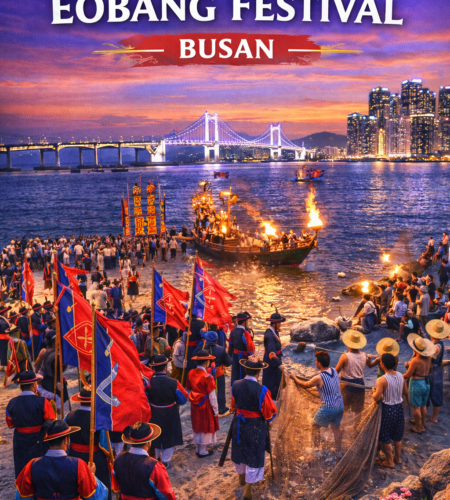
The Gwangalli Eobang Festival (광안리어방축제) is Busan’s signature spring event at Gwangalli Beach—a lively mix of coastal culture, traditional “Eobang” (fisher cooperative) heritage, parades, performances, and hands-on activities with the Gwangan Bridge as the backdrop. It’s organized by Suyeong-gu and is typically held in May.
Planning note (important): Official dates can shift each year. The most recently published full schedule in official listings is May 9–11, 2025. For your visit, always confirm the latest dates/program on the Suyeong-gu festival site first.
What the Gwangalli Eobang Festival is about 🎣
Historically, “Eobang” referred to a cooperative structure that connected fishermen with the naval forces in the Suyeong region during the Joseon era—something like today’s fishery cooperatives. The festival reimagines this tradition with modern stage shows, folk elements, and “try-it-yourself” fishing-themed experiences.
Gwangalli Eobang Festival at a glance ✅
| Item | Details |
|---|---|
| Focus area | Gwangalli Beach + Suyeong Historical Park (Suyeong-gu, Busan) |
| Typical season | May (annual) |
| Last published full dates (official listings) | 2025-05-09 to 2025-05-11 |
| Daily operating window (listing) | 10:00–22:00 (programs vary) |
| Tickets | Free entry; some experiences may charge a small fee |
| Official organizer/host | Suyeong-gu / Festival Organizing Committee |
| Official contact | +82-51-610-4062 |
What to do at the Gwangalli Eobang Festival 🎭🐟
1) Don’t miss the “BEST” signature programs ⭐
Suyeong-gu’s official festival page highlights major flagship events such as:
- Musical “Eobang” (multiple showtimes across the festival days)
- Gyeongsang Jwasusa parade (traditional-style procession)
- Jindueohwa (nighttime torch-light fishing reenactment style program)
- Eobang folk village exhibition & hands-on experiences (all-day style zone)
These are the “anchor events” that give the festival its identity—plan your day around them.
2) Experience zones: the fun, hands-on side 🧺✅
Even if you don’t speak Korean, the festival is easy to enjoy because many activities are visual and participatory. Official listings note that the festival is open to all ages, and some “experience programs” may have fees.
3) The setting: Gwangalli Beach + Gwangan Bridge 🌉📍
A huge part of the vibe is simply being on the beach with the bridge view—especially at dusk when the atmosphere gets “festival-city” cinematic.
Best time to visit (so you actually enjoy it) ⏱️
- Families / relaxed pace: late morning to early afternoon (less crowded, easier photos).
- For the most dramatic atmosphere: evening programs + beach lights. Official listings often show the festival window extending into the night.
- Weather reality ⚠️: programs can change due to rain (for example, a 2025 notice mentioned cancellations due to rainy weather).
How to get there 🚇🚌🚕
By subway (easiest) 🚇
The festival area is walkable from Busan Metro Line 2:
- Gwangan Station is a common choice (short walk to the beach area).
If you’re staying in Haeundae/Centum/Seomyeon areas, Line 2 is usually the simplest route.
By bus 🚌
Official visitor info lists buses such as 41 and 42 stopping near Gwangalli Beach.
By taxi 🚕
Taxi is practical late at night when you want a direct drop-off. Tip: traffic can be slow near the beach during major events—consider getting dropped a little outside the busiest block and walking the last 5–10 minutes.
Hours / operating times ⏱️
Festival schedules are program-based, but the tourism listing provides a broad 10:00–22:00 window.
For exact showtimes (musical/parade/night programs), check the Suyeong-gu festival schedule page close to your travel dates.
Tickets / prices / cards 💳
- Entry: Free.
- Some experiences: may be paid (this is explicitly noted in official tourism listings).
Bring a small amount of cash + a card just in case (for food stalls and paid activities).
Practical tips & common mistakes ✅⚠️
Tips that make the day smoother ✅
- Arrive by subway if possible 🚇 — beach roads can jam during festival peaks.
- Pick 1–2 “must-see” signature programs (musical / parade / night event) and build everything else around them.
- Add a buffer for weather 🌦️ — programs can be adjusted or canceled if conditions are bad.
- Best photos: sunset-to-night on the beach with the bridge view 🌉✨
Common mistakes ⚠️
- Assuming the same dates every year. The festival is typically in May, but the exact weekend can vary—verify on the official festival site.
- Trying to do everything. Choose your “core” program(s), then wander.
- Underestimating crowds on peak evening hours—especially near main stages.
FAQ ❓
Is the Gwangalli Eobang Festival free?
Yes—official tourism listings state it’s free, with possible fees for certain experience programs.
Where exactly does it happen?
In the Gwangalli Beach area and Suyeong Historical Park in Suyeong-gu, Busan.
What are the festival hours?
A common listed operating window is 10:00–22:00, but specific programs have their own times.
Does it happen every year?
Yes—Visit Busan describes it as a festival held each May.
Can schedules change last-minute?
Yes—weather can affect programs (official city news has noted cancellations due to rain).
Conclusion
If you want one Busan festival that feels distinctly “local coastal culture” (not just a generic concert), the Gwangalli Eobang Festival is a strong pick: traditional heritage themes, signature performances, hands-on activities, and the unbeatable backdrop of Gwangalli Beach and Gwangan Bridge. Just remember the golden rule: confirm the latest dates and showtimes on the official Suyeong-gu festival site before you go.
Comments