
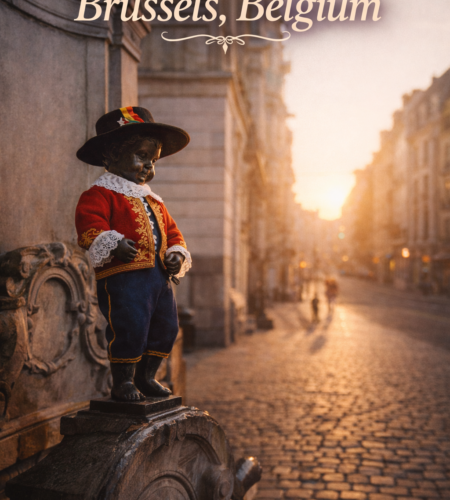
Manneken Pis Brussels is the city’s cheekiest icon: a tiny bronze boy that started life as a public fountain and grew into a symbol of Brussels’ playful, rebellious spirit. Yes, the statue is small—but the tradition around it is huge: costumes, ceremonies, and an official museum wardrobe just a few minutes away. If you want the visit to feel “worth it,” treat Manneken Pis as a quick stop plus a short add-on (the wardrobe museum or the Brussels City Museum) so you leave with the story, not just a selfie.
Manneken Pis Brussels at a glance 📍
| Quick fact | What to know |
|---|---|
| Location | Rue de l’Etuve, 1000 Brussels (in the historic center) |
| Cost | The statue is free to see ✅ |
| What it is | A fountain statue with a long folklore tradition; once part of the city’s drinking-water network |
| When to go | Early morning or late evening for fewer crowds (and better photos) ✅ |
| Best “upgrade” | GardeRobe MannekenPis (wardrobe museum) +/or Brussels City Museum |
| Museum hours | GardeRobe: Tue–Sun 10:00–17:00 (closed Mon + holidays) |
The real story behind Manneken Pis Brussels 🏛️
The City of Brussels notes that Manneken-Pis was originally a fountain and played an essential role in the historical distribution of drinking water from as early as the 15th century. Over time, the statue became more significant in city life and even survived the 1695 bombardment of Brussels—helping cement its status in local folklore.
What matters for visitors today: Manneken Pis is not just a “funny statue.” Brussels treats it like a cultural mascot. It’s dressed for events, honored by visiting groups, and woven into the city’s identity—mischievous, self-mocking, and proudly non-serious.
A quick myth-buster (so you’re not disappointed)
Many people expect something grand. Instead, you get a tiny landmark with a big tradition. The “wow” factor is the ritual: costumes, calendar dressings, and the museum collection.
How to visit Manneken Pis Brussels (the statue) ✅
1) Do it fast—and do it smart ⏱️
Time needed: 5–10 minutes for the statue itself, 20–40 minutes if you include a nearby add-on (waffle/chocolate stop or the wardrobe museum).
Best times for photos:
- Early morning (quiet streets, fewer tour groups)
- After dark (the center looks great lit up; vibes are better)
2) What to look for (so it feels like more than a quick glance) 🔎
- The fountain setup (it’s not just a statue on a wall; it’s tied to the city’s history as a fountain)
- Whether he’s dressed (a costume changes the whole feel of the photo)
- The crowd choreography: step aside, let groups rotate, then take your shot quickly
Manneken Pis Brussels costumes: how it really works 👔
He’s dressed often—and there’s an official calendar 📅
The museum site explains that Manneken-Pis is dressed for almost half of the year, and an official calendar is published once a month listing upcoming outfits.
The City of Brussels adds that dressings are handled by a city employee and that 23 dressings are planned on fixed dates, plus additional outfits as new suits are received.
Practical takeaway: If seeing a specific costume matters, check the monthly calendar before you go.
How gifts/costumes are approved (yes, there are rules) ⚠️
The City of Brussels describes a formal approval process for costume gifts and states new costumes cannot be advertising, commercial, political, or religious in character.
The must-do add-on: GardeRobe MannekenPis (Wardrobe Museum) 🖼️
If you want Manneken Pis to feel like a real attraction (not a 30-second stop), this is the move.
What it is
The GardeRobe MannekenPis is a dedicated museum a short walk from the fountain, showcasing a rotating selection from his costume collection. Visit.brussels notes the wardrobe includes more than 1,000 pieces and that the museum opened in 2017.
Address + walking distances (super handy)
- Rue du Chêne 19, 1000 Brussels
- Walking time examples (official):
- Fountain: 2 minutes
- Grand-Place: 5 minutes
- Central Station: 6 minutes
Opening hours ⏱️
- Open Tuesday to Sunday 10:00–17:00
- Closed Monday + listed holidays
Tickets & prices 💳
Here’s the cleanest way to think about it:
| Option | Price | Best for |
|---|---|---|
| Wardrobe museum only (Visitor) | €5 | You only care about costumes and want a quick museum stop |
| Combined ticket: Brussels City Museum + GardeRobe | €10 | Best value if you want the “full story” (Grand-Place museum + wardrobe) |
| Free entry | First Sunday of the month | Budget planning (expect more people) |
Important practical rule: luggage ⚠️
Suitcases and travel bags are not allowed in the wardrobe museum; the museum suggests lockers at Brussels Central.
Brussels City Museum: the “deeper history” option 🏛️
Visit.brussels notes that the original statuette—after thefts and damage—rests safely in the Brussels City Museum (in the King’s House / Maison du Roi on the Grand-Place).
Crucial value detail (official): the Brussels City Museum’s practical page states that your ticket gives access to the GardeRobe MannekenPis.
Brussels City Museum hours + ticket snapshot ⏱️💳
- Open Tue–Sun 10:00–17:00, closed Mondays
- Adults €10, and it includes access to the wardrobe museum
Best use-case: You’re in Brussels for culture/architecture anyway (Grand-Place, City Hall, museums). This turns Manneken Pis from “tiny statue” into a real storyline.
How to get there 🚶♂️ 🚇 🚌 🚆
Walking (best for most visitors) ✅
Manneken Pis sits in the central historic core. If you’re already doing Grand-Place, it’s an easy add-on.
Public transport tips (for the wardrobe museum route) 🚇🚌
Official transport guidance for the wardrobe museum includes:
- Tram: Anneessens (lines 4, 10)
- Bus: Grand-Place (33, 48, 95); Central Station (29, 66)
- Metro: Central Station (lines 1, 5)
- Train: Central Station
Fast planning hack: Route to Brussels Central, then walk 6 minutes.
Tickets / prices / cards (quick decision guide) 💳
Most visitors don’t need complicated math. Use this simple decision tree:
- Only want the photo?
→ Statue only: free ✅ - Want the “costume culture” without a long museum day?
→ GardeRobe Visitor ticket €5 - Want the full context + best value?
→ Brussels City Museum €10 (includes wardrobe access)
Tips / common mistakes (what people do wrong) ✅⚠️
✅ Set expectations: It’s famously small—go for the tradition, not size.
✅ Check if he’s dressed: The official calendar is updated monthly; costumes change the whole experience.
⚠️ Don’t go Monday for the wardrobe museum: It’s closed Mondays.
⚠️ Don’t show up with luggage: Suitcases/travel bags aren’t allowed at the wardrobe museum.
✅ Do the 2-stop combo: statue (2 minutes) → wardrobe museum (15–40 minutes). The walk is basically nothing.
✅ Use the free day strategically: First Sunday is free at the wardrobe museum—great for budget travelers, but expect it to be busier.
⚠️ Avoid “peak crush” timing: Midday can be shoulder-to-shoulder; early/late is smoother.
FAQ
Where is Manneken Pis Brussels located?
It’s in central Brussels on Rue de l’Etuve.
Is Manneken Pis Brussels free?
Yes, seeing the statue is free—it’s in public space.
Is the GardeRobe MannekenPis museum worth it?
If you want more than a quick photo, yes. It’s dedicated to the costumes and tradition and is only minutes away on foot.
What are the GardeRobe MannekenPis opening hours?
Tue–Sun 10:00–17:00, closed Mondays (and listed holidays).
How often is Manneken Pis dressed?
He’s dressed for almost half the year, and an official monthly calendar lists outfits.
Can I get a combined ticket with another museum?
Yes. The official wardrobe site lists a combined ticket with Brussels City Museum for €10, and the City Museum states its ticket gives access to the wardrobe museum.
Is there a free day for the wardrobe museum?
Yes—every first Sunday of the month is free (official museum info includes 2026 dates).
Conclusion
Manneken Pis is the kind of landmark that rewards a “micro-plan.” See the statue quickly, then spend your real time on the tradition: costumes, calendar dressings, and the wardrobe museum (or the City Museum for deeper context). Do that, and Manneken Pis Brussels stops being “that tiny statue” and becomes one of the most characterful cultural quirks in Europe.
Comments