
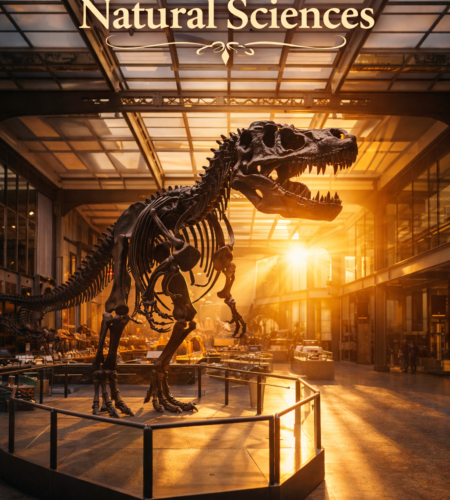
The Museum of Natural Sciences in Brussels (at the Royal Belgian Institute of Natural Sciences) is one of the city’s best “high-impact, low-stress” attractions—especially if you want dinosaurs, biodiversity, and hands-on science that works for adults and kids alike. The Museum of Natural Sciences is best known for its Dinosaur Gallery (described by Visit Brussels as the largest in Europe), but it’s also a full-day museum with multiple permanent galleries plus rotating temporary exhibitions.
This guide covers exactly what you need to plan your visit: what to see first, how long to budget, how to get there by public transport, official opening times (including last admission), ticket prices, free-entry moments, and practical tips that save time.
Why the Museum of Natural Sciences is worth it ✅🦖
A Dinosaur Gallery that’s legitimately world-class
Visit Brussels highlights the museum’s Dinosaur Gallery and names some of the stars you can expect (including the Bernissart Iguanodons, T. rex, Triceratops, Diplodocus, and many more).
It’s not “just dinos”
The museum’s appeal is range: you can move from prehistoric megafauna to modern biodiversity and human evolution without it feeling like separate museums. Visit Brussels specifically calls out multiple permanent galleries such as Living Planet, Gallery of Humankind, Gallery of Evolution, plus BiodiverCITY, Mosasaur Hall, and Mineral Hall.
It fits almost any Brussels itinerary
It’s centrally located at Rue Vautier 29, 1000 Brussels, and it’s walkable from Brussels-Luxembourg station—so it’s easy to slot into a day in the European Quarter.
What to see inside the Museum of Natural Sciences 🗺️
Dinosaur Gallery (start here if you’re visiting with kids) 🦖
If dinosaurs are your priority, go early and do the Dinosaur Gallery first—before school groups and weekend crowds peak. This is the museum’s signature, and the one area people regret rushing.
Don’t miss:
- The famous Bernissart Iguanodons (a Brussels icon)
- Big-name dinos like T. rex and Triceratops (as highlighted by Visit Brussels)
Living Planet (best “modern science” gallery) 🌍
Visit Brussels describes Living Planet as a family-friendly and scientific approach to biodiversity—great if you want something visually engaging that still teaches real concepts.
Gallery of Humankind (best for adults + teens) 🧬
If you like anthropology, evolution, and “how we became us,” this is the gallery to prioritize. Visit Brussels specifically notes learning about the human body and evolution here.
Gallery of Evolution (the “time travel” connector) ⏳
This is a strong bridge between dinosaurs and modern biodiversity—use it to turn your visit into one coherent story rather than “rooms of stuff.”
BiodiverCITY + Mosasaur Hall + Mineral Hall (the “bonus trio”) 🏙️🦎💎
If you have time, these three make the museum feel bigger and more varied. Visit Brussels points out:
- Urban species in BiodiverCITY
- Cretaceous sea “kings” in Mosasaur Hall
- Crystals in Mineral Hall
Temporary exhibitions (always check what’s on) 🆕
The museum runs temporary exhibitions alongside its permanent galleries. For example, the official site currently highlights an exhibition called “FLIGHT.”
How long to plan (realistic timing) ⏱️
| Visit style | Time needed | Best for |
|---|---|---|
| “Dinos only” sprint | 60–90 min | Tight itinerary, families with small kids |
| Core highlights | 2–3 hours | Most visitors |
| Full museum + breaks | 4–6 hours | Museum lovers, rainy-day plan, families with older kids |
Pro tip: If you want the museum to feel “big,” don’t try to see everything evenly. Do Dinosaur Gallery + one “science story” gallery (Living Planet or Humankind) and then add extras.
How to get there 🚆🚇🚌🚲
Address: Museum of Natural Sciences, 29 Rue Vautier, 1000 Brussels.
Train 🚆
- Brussels-Luxembourg station is about a 5-minute walk (take exit 2).
Bus 🚌
- Bus 38 or 95 to “Idalie” or “Luxembourg” (about a 5-minute walk)
- Bus 34 or 80 to “Museum” stop (opposite the museum)
Metro 🚇
- Line 1 or 5 to “Maelbeek/Maalbeek” (about a 10-minute walk)
- Line 2 or 6 to “Trône/Troon” (about a 10-minute walk)
Bike share (Villo!) 🚲
There are Villo! stations nearby; the museum notes one close station location and recommends cycling as an option.
Hours / Operating times ⏱️
Regular opening times (official):
- Tue–Fri: 9:30–17:00
- Sat–Sun: 10:00–18:00
- Mon: closed
Last admission (important):
- Tue–Fri: last admissions between 15:30 and 16:00
- Weekends: last admissions between 16:30 and 17:00
Closed on: 25 December, 1 January, 1 May.
Special days: On 24/12 and 31/12, the museum closes earlier (open until 15:00, last ticket at 13:30).
Tickets / prices / cards 💳
Standard admission fees (official) 💶
| Ticket type | Price |
|---|---|
| 0–3 years | Free |
| 4–17 years | €5.00 |
| Students (18–23, valid student card) | €5.00 |
| Adult | €13.00 |
| 65+ | €10.00 |
Annual pass (if you’ll visit twice) 🎫
- Annual pass (adult): €30
- Reduced annual pass (students, 65+, disabled visitors, etc.): €20
Free entry (official rules) ✅
The museum lists multiple free-entry cases, including:
- Everyone on the first Wednesday of every month after 13:00
- Children under 4 (with at least one paying adult)
- One accompanying person per disabled visitor
…and more categories. They also note that people using the free tariff may still need to take a free ticket online to respect quotas.
Train discount: Discovery Ticket 🚆💡
The museum describes a Discovery Ticket that combines museum entry with a 40% reduction on your train journey (using a code from your museum ticket, then booking via Belgian Rail).
Brussels Card 🪪
The museum provides a Brussels Card section (and indicates it’s available at the museum tills). If you’re doing multiple museums + public transport in a short time window, it can be worth comparing.
Tips / common mistakes ✅⚠️
✅ Go earlier than you think (last admission is strict)
Many visitors arrive “an hour before closing” and are surprised by last admission cutoffs. Plan to be at the entrance well before last admission—especially on weekends.
✅ Do the Dinosaur Gallery first
It’s the museum’s flagship, and it’s the easiest place to lose time later due to crowding.
⚠️ Don’t over-plan every gallery
Pick 2–3 core galleries (Dinosaur + Living Planet or Humankind + one bonus). You’ll enjoy it more than speed-running everything.
✅ Use Brussels-Luxembourg station as your navigation anchor
If you’re already using trains or staying near the centre, this is one of the simplest approaches—5 minutes on foot, exit 2.
⚠️ Driving is usually not worth it
The museum explicitly recommends public transport and notes parking is limited and its car park is very small (prioritized for visitors with reduced mobility).
FAQ
Is the Museum of Natural Sciences good for kids?
Yes—especially for dinosaurs and the visually engaging biodiversity sections. Visit Brussels positions it as a strong “family” attraction and highlights its dinosaur and biodiversity experiences.
What’s the #1 must-see?
The Dinosaur Gallery (largest in Europe, per Visit Brussels) and the Bernissart Iguanodons.
When is the best “cheap” time to go?
The museum states free entry is available on the first Wednesday of each month after 13:00 (with quota/ticketing rules).
How do I avoid arriving too late?
Follow the official last admission guidance: last entry is earlier than closing time.
Conclusion
The Museum of Natural Sciences is one of Brussels’ safest “can’t-go-wrong” attractions: big dinosaurs, strong modern science galleries, and practical access via train, metro, and bus. Plan around last admission, start with the Dinosaur Gallery, and build your visit around 2–3 galleries instead of trying to see everything evenly—you’ll get a better experience with less effort.
Comments