
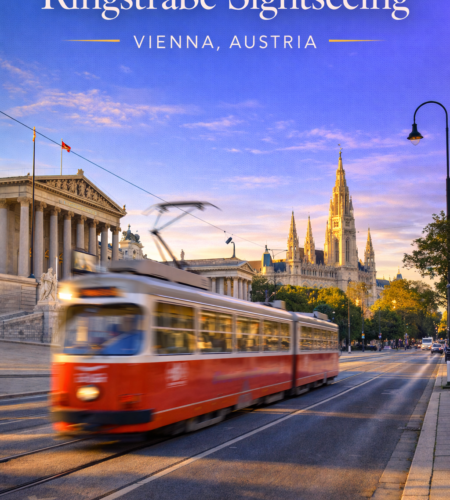
Ringstraße Sightseeing is one of the simplest ways to “understand Vienna fast.” The Ringstraße is a 5.3 km grand boulevard wrapping around the historic Inner City, lined with many of Vienna’s most famous landmarks—from the State Opera and Hofburg area to Parliament, City Hall, and major museums.
You can do Ringstraße Sightseeing in two practical ways:
- 🚋 Ring Tram (DIY): ride regular trams along the Ring for a relaxed “moving viewpoint.”
- 🚶 Ring Walk: a self-guided walk that lets you stop for photos, parks, and quick museum add-ons.
This guide gives you a clean route, real-world timing, ticket logic, and the mistakes that make people quit halfway. ✅
What is the Ringstraße (and why it’s so iconic)? 🏛️
The Ringstraße was created as a major urban planning project ordered by Emperor Franz Joseph in 1857 (“It is my will…”). It was built over decades and became Vienna’s showpiece boulevard—wide, monumental, and designed to connect imperial power with a modern capital identity.
What makes it perfect for visitors:
- ✅ It’s dense with landmarks (you’re never walking “through nothing” for long).
- ✅ It’s flat and navigable (easy even if you don’t know Vienna well).
- ✅ It’s flexible: 45 minutes by tram-viewing, or a half-day walk with stops.
Ringstraße Sightseeing: Ring Tram vs Ring Walk ✅
Ring Tram (DIY on regular trams) 🚋
Best if you want: comfort, quick overview, bad-weather option, or a “first-day orientation.”
- You can experience the Ring “on board of a tram,” according to Vienna’s official tourism guidance.
- You’ll see the big civic buildings in a continuous sequence without managing a long walk.
Reality check: This isn’t hop-on-hop-off sightseeing narration. It’s public transport + your own “eyes + map.”
Ring Walk 🚶
Best if you want: photos, parks, short museum stops, and “Vienna at street level.”
Vienna’s official Ringstrasse tour list is basically a ready-made walking structure (Urania → MAK → Stadtpark → Opera → Hofburg area → museums → Parliament → City Hall → University/Votive Church → Stock Exchange/Ringturm).
The classic Ring sights you’ll pass (the “headline lineup”) 📍
Vienna’s tourism board highlights the Ringstraße as a corridor of monumental historicist buildings (1860s–1890s), and lists core landmarks such as:
- Vienna State Opera
- Hofburg / Neue Burg area
- Kunsthistorisches Museum
- Natural History Museum
- Parliament
- City Hall (Rathaus)
- Burgtheater (National Theater)
- University of Vienna + Votive Church
If your goal is “the greatest hits,” these are the ones you’re aiming to visually collect in one route.
The best Ring Walk route (practical and photogenic) 🚶📸
Vienna’s official “Ringstrasse tour” is a great backbone. Here’s a traveler-optimized version that stays logical and minimizes backtracking.
Option A: 2–3 hour “Ring Walk” (best first-timer slice)
Start: Vienna State Opera → End: Votive Church / University area
- 🎭 Vienna State Opera (quick exterior photos)
- 🌳 Burggarten / Hofburg edge (short park reset)
- 🏛️ Kunsthistorisches Museum + Natural History Museum (Maria-Theresien-Platz “twin museums” moment)
- 🏛️ Parliament (major façade stop)
- 🏰 City Hall (Rathaus) (best near blue hour)
- 🎭 Burgtheater (quick exterior + architecture)
- 🎓 University + Votive Church (strong “finale” skyline)
Why this route works: it stacks the “biggest façades” in a continuous run with parks in between, exactly how Ringstraße was designed to be experienced.
Option B: 3–5 hour “Full Ring Day” (with two easy add-ons)
Add:
- 🖼️ MAK (Museum of Applied Arts) on the Stubenring stretch
- 🌿 Stadtpark + Johann Strauss Monument for a classic Vienna photo stop
- 🌊 Urania / Danube Canal end for a different city vibe
Ring Tram (DIY): How to do it without overthinking 🚋✅
Vienna’s tourism board explicitly says you can experience the Ring on a tram.
To make it practical:
The simplest method
- Pick any Ring “headline” stop (Opera / Parliament / Rathaus / Schottentor / Schwedenplatz area).
- Ride along the Ring stretch you care about.
- Get off when you see something you want to photo-walk.
The ticket logic (don’t mess this up) 💳
From 1 January 2026, Wiener Linien states:
- Single ticket: €3.20
- Discounted child single: €1.60
- 24-hour ticket: €10.20
- 7-day ticket: €28.90
Also: a single ticket is valid for one journey in one direction, valid 80 minutes after validation, transfers allowed, but you may not interrupt the journey.
Practical takeaway: If you plan to hop off for photos and hop back on later, you’ll often prefer a day ticket over single tickets (especially if you’re also doing other sights that day).
“Vienna Ring Tram” (yellow tourist tram) — important note ⚠️
You may see old advice online about a dedicated Vienna Ring Tram sightseeing tram with onboard audio. Its operating status has been inconsistent over the years, and multiple sources report it being discontinued/suspended at times (e.g., city press info notes it was “einstellt”/stopped during works; other references suggest it may have been phased out in the 2020–2023 period).
How to handle this in 2026:
Treat the dedicated tourist Ring Tram as a bonus if you spot it, not as the foundation of your plan. For guaranteed Ringstraße Sightseeing, rely on walking + regular public trams, which are always part of the city network.
Hours / operating times ⏱️
Ringstraße itself
Ringstraße is a public boulevard—so your “hours” are basically daylight + your stamina.
Museums and interiors
Each landmark has its own opening hours (Opera tours, Parliament tours, museums, etc.). Build your Ring Walk around the two or three interiors you actually want—don’t try to “interior everything” in one day.
Best time of day for Ringstraße Sightseeing 📸
- 🌤️ Morning: cleaner photos, fewer crowds
- 🌇 Golden hour / blue hour: Rathaus + Parliament façades look incredible
- 🌙 Night: great for lit buildings, but your photos depend on weather and lighting conditions
How to get there 📍🚇
You can join Ringstraße Sightseeing from almost anywhere in the Inner City. The easiest “anchor hubs” are usually:
- Karlsplatz area (State Opera end)
- Volkstheater / MuseumsQuartier area (museums + Parliament zone)
- Schottentor / University area (northern end)
Use Vienna’s official Ringstrasse “tour” list to pick the nearest starting landmark from your hotel and begin there.
Tickets / prices / cards (what you actually need) 💳
If you do the Ring Walk only
✅ Free.
If you use trams as your Ring Tram “ride”
You’ll use Wiener Linien tickets (single / 24-hour / 7-day). Pricing and validity rules for 2026 are published by Wiener Linien.
Tips and common mistakes ✅⚠️
Do this ✅
- ✅ Choose one direction + one “finish” landmark (Opera → Votive Church is a great first walk).
- ✅ Use the official Ringstrasse tour list as your checklist—Urania, MAK, Stadtpark, Opera, Hofburg, museums, Parliament, Rathaus, Burgtheater, University/Votive.
- ✅ If walking, take a short “park reset” (Burggarten / Volksgarten stretches are perfect for that).
Avoid this ⚠️
- ⚠️ Trying to walk the full Ring plus every interior in one day (you’ll burn out).
- ⚠️ Buying single tickets if you plan to break your journey multiple times (the “no interruption” rule matters).
- ⚠️ Planning around the dedicated tourist “Vienna Ring Tram” without verifying it—your trip will be better if you treat it as optional.
FAQ ❓
How long is the Ringstraße?
Vienna’s tourism board states the Ringstraße is 5.3 km long.
Can you do Ringstraße Sightseeing by tram?
Yes—Vienna’s official Ringstrasse tour says you can experience it on foot or on board of a tram.
What’s the best “must-see” group of buildings?
Opera → museums → Parliament → Rathaus → Burgtheater → University/Votive is the strongest continuous sequence of iconic façades.
What does a single public transport ticket cost in 2026?
From 1 January 2026, Wiener Linien lists a single ticket at €3.20 (discounted child single €1.60).
Conclusion
Ringstraße Sightseeing is Vienna’s easiest “grand architecture + city identity” experience. Do it as a Ring Walk if you want photos and parks, or as a DIY Ring Tram ride using regular trams if you want comfort and speed. Either way, you’ll pass the Ring’s signature lineup—Opera, Hofburg edge, twin museums, Parliament, City Hall, Burgtheater, and the University/Votive zone—without needing an expensive tour or complicated planning.
Comments