
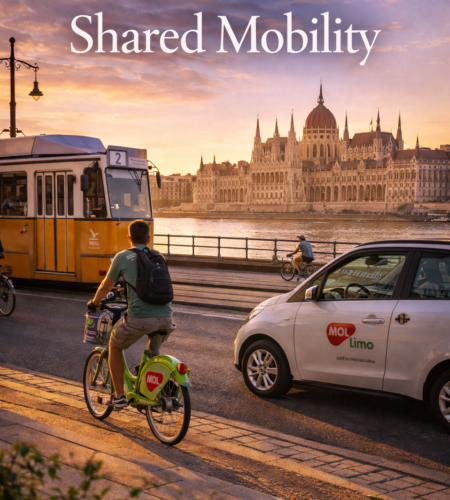
Budapest is a city where shared mobility can genuinely replace a rental car—especially if you combine public transport + bike share + occasional car sharing. The only catch: each option has its own “rules of the game” (zones, tickets, validation, parking), and most tourist mistakes come from mixing them up. 🚇🚲🚗✅
This guide to Rentals & Shared Mobility in Budapest explains what to use, when to use it, what it costs (where official prices are available), and how to avoid the classic traps.
Quick decision guide: what should you use? ✅
Here’s the simplest way to pick the right option:
- Staying inside central Budapest (Districts V–VII, river area): public transport + walking + MOL Bubi 🚇🚶♂️🚲
- Cross-city trips with time pressure: public transport + occasional car sharing 🚇🚗
- Airport transfers: 100E Airport Express ticket (special fare) ✈️🚌
- Day trips outside the city / countryside: rental car (airport or downtown agencies) 🚗🧳
- “I want freedom but hate parking”: car sharing (within service zones) ✅🚗
The backbone: public transport with BudapestGO 🚇📱
For most travelers, the smartest approach is: don’t rent a car for the whole trip—use BKK public transport and add shared mobility only when it saves time.
BudapestGO app (official)
BudapestGO is BKK’s official route-planning and ticketing app. You can buy digital single tickets, time-based tickets, and 24/72-hour travelcards, and use them across BKK lines (with exceptions like the airport express).
Airport Express 100E: special ticket rule ⚠️✈️
The 100E Airport Express requires a dedicated airport shuttle bus single ticket and it’s valid only for one uninterrupted trip on that line (no transfers to other lines).
Budapest Airport’s own transport page also highlights that 100E needs this special ticket (priced there as 2,200 HUF).
✅ Practical tip: If you’re using public transport daily, you’ll still need a separate 100E ticket for the airport ride.
Bike sharing: MOL Bubi (Budapest’s official public bikes) 🚲✅
How it works (official overview)
BKK describes MOL Bubi as simple: download the app, register, and unlock bikes via QR code at docking stations.
Prices you can plan around (official)
MOL Bubi currently lists:
- MOL Bubi Pilot Pass: 500 HUF (validity ends 15 February 2026)
- First 30 minutes of each ride started are free (for up to two bikes)
- After 30 minutes: 50 HUF/min
- Pay As You Go: 50 HUF/min and a 100 HUF bankcard registration fee (credited toward use)
✅ Best use cases:
- Short rides between attractions (especially flat Pest)
- “Last mile” to a museum/park when metro + walking feels long
- Morning/late afternoon when traffic is calmer
⚠️ Common mistake:
- Riding longer than 30 minutes without docking—costs rise fast. Use “short-hop” strategy: ride, dock, reset.
Scooters and other micromobility 🛴⚠️
Budapest is seeing increased micromobility usage (walking, cycling, scooters, e-bikes, etc.), and BKK frames it as a supplement to public transport rather than a replacement.
✅ Practical advice (without legal overreach):
- Treat scooters as short-distance tools (same job as bike share).
- Prefer bike lanes and calmer streets.
- Park responsibly (don’t block sidewalks/ramps), because this is the main source of local complaints.
If you plan to rely heavily on scooters, check the latest city rules on the day of use (regulations can change and differ by operator).
Car sharing in Budapest: the “occasional car” strategy 🚗✅
Car sharing is perfect when you want a car for 30 minutes to a few hours—shopping runs, hilly Buda trips, bad weather days, or “I’m done walking” evenings.
Major services to know
- MOL Limo (carsharing) – MOL describes it as a flexible solution within a service zone, designed to work together with public transport and bike sharing.
- GreenGo (electric carsharing) – GreenGo promotes itself as fully electric and highlights service zone logic (you can leave the zone during rental, but typically end rentals in-zone).
- wigo carsharing – wigo promotes free-floating usage within a Budapest-area “wigo zone” and highlights zone-based pickup/dropoff.
Airport angle: carsharing at BUD ✈️🚗
Budapest Airport lists MOL Limo and wigo among its transport/carsharing information, which is useful if you want a car right after landing without doing a classic rental counter process.
✅ Best use cases:
- Rainy/cold day when walking is miserable 🌧️
- Crossing the city with luggage 🧳
- Short errands (supermarket run, bulky items)
- Trips to places that are “annoying by transit” but close by
⚠️ Common mistakes:
- Assuming you can end a trip anywhere. Most services require ending within a specific zone.
- Forgetting parking rules still apply even if “parking is included” by the service.
Traditional car rentals (when you actually need them) 🚗🧳
If you’re doing:
- countryside day trips,
- multi-city Hungary travel,
- or you want complete flexibility outside Budapest,
…then a classic rental car can make sense.
Budapest Airport publishes a list of on-site car rental providers (e.g., Avis, Europcar, Hertz, Enterprise/Alamo/National, etc.).
✅ Best practice:
- Use public transport + shared mobility inside the city.
- Pick up a rental car only for the days you leave Budapest.
Park-and-Ride (P+R): the smart choice for drivers entering the city 🅿️🚇
If you arrive by car (or have a rental) but don’t want central parking stress, BKK explains P+R car parks at outer metro termini and key rail hubs (e.g., Kelenföld at M4 has ~1,500 spaces).
✅ Typical “driver strategy”:
- Park at P+R
- Use metro/tram for the city core
- Avoid central parking fees + traffic headaches
Can you bring bikes on public transport? 🚲🚋
Yes—on marked vehicles and under rules.
BKK’s official “Bikes on board” guidance states:
- Only one bike per passenger
- Bikes allowed only on vehicles marked with a bike pictogram
- Size limits apply for standard bikes on street-level transport
They also note that small bicycles/folding bikes (and scooters as hand luggage) can be carried under certain conditions.
Comparison table: what to use, cost vibe, and best scenarios ✅
| Option | Best for | Typical friction | What to watch |
|---|---|---|---|
| Public transport (BKK) | Most daily sightseeing | Ticket validation + transfers | 100E needs special ticket |
| MOL Bubi bikes | Short hops, flat routes | Docking stations | 30-min free window + per-minute after |
| Scooters | Very short hops | Parking + changing rules | Use responsibly; rules may evolve |
| Car sharing (MOL Limo/GreenGo/wigo) | Occasional “need a car” moments | Service zones | Ending/parking rules + zone limits |
| Rental car | Day trips outside Budapest | Paperwork + parking | Don’t use it for inner-city sightseeing |
How to build the perfect “Budapest mobility stack” (realistic plan) ✅
If you’re staying 2–5 days in central Budapest
- Use BudapestGO for route planning and tickets 🎫📱
- Add MOL Bubi for short scenic hops 🚲
- Keep car sharing as a backup for rain/luggage/late evenings 🚗
- Use 100E special ticket only for airport transfers ✈️🚌
If you’re doing countryside trips
- Add a rental car for those days only (airport pickup is convenient).
Tips & common mistakes ✅⚠️
- Mistake: buying a normal ticket/pass and assuming it covers the airport express
✅ Fix: 100E requires a dedicated ticket - Mistake: using MOL Bubi for long uninterrupted rides
✅ Fix: ride in 20–25 minute hops and dock to reset free time - Mistake: relying on car sharing for a whole day itinerary
✅ Fix: use it as an “occasional car,” not a full-day replacement - Mistake: bringing a bike on any tram/bus
✅ Fix: only on vehicles marked for bikes and follow BKK rules - Mistake: driving into the center and hunting for parking
✅ Fix: use P+R + metro
FAQ
What’s the best app for transport in Budapest?
BudapestGO (official BKK app) for route planning and ticket purchases.
Do I need a special ticket for the airport bus?
Yes. The 100E Airport Express requires an airport shuttle bus single ticket and it’s valid only on that line.
Is MOL Bubi worth it?
Yes for short rides. Official pricing highlights a 500 HUF pass (valid until 15 Feb 2026) and 30 minutes free per ride started, then 50 HUF/min.
Which car sharing services work in Budapest?
Major names with official presence/info include MOL Limo, GreenGo, and wigo.
When should I rent a car instead of using shared mobility?
Rent a car mainly for day trips outside Budapest. Budapest Airport lists multiple standard car rental providers on-site.
Conclusion
For most travelers, Rentals & Shared Mobility in Budapest is about building a smart mix: public transport as the backbone, MOL Bubi for quick wins, and car sharing only when it actually saves time or stress. If you reserve classic car rental for countryside days, you’ll spend less, park less, and enjoy the city more. 🚇🚲🚗✅
Comments