
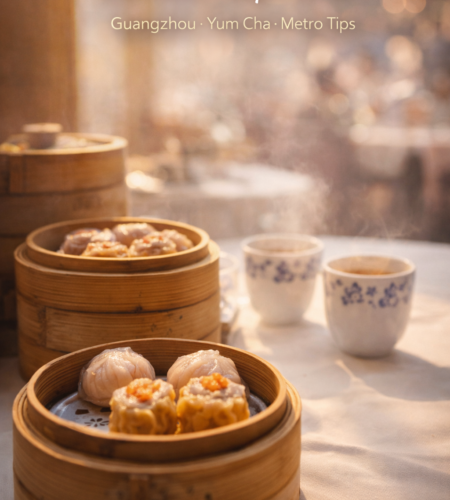
A dim sum experience in Guangzhou is usually a yum cha (morning tea) brunch—small dishes served with tea, shared family-style, often lasting well into late morning. Yum cha is a Cantonese dining tradition built around tea + dim sum, traditionally eaten in the morning or early afternoon.
This guide is practical: when to go, what to order, how ordering works, tea etiquette, what tourists mess up, and a few “classic-style” venue ideas (without forcing you into one single restaurant).
What “yum cha” means in Guangzhou (and why it’s different) 🍵✅
In Cantonese culture, yum cha literally means “drink tea,” but in practice it refers to going out for dim sum with tea—often with family groups, especially on weekends.
A 2023 academic paper also notes that yum cha culture was recognized as an Intangible Cultural Heritage of Guangzhou (2007)—a clue to how culturally “serious” this daily habit is in the city.
Best time for a dim sum experience in Guangzhou ⏱️🌞
The sweet spot
- Weekdays: arrive 8:00–10:00 for the most relaxed experience (shorter queues, calmer ordering).
- Weekends/holidays: go earlier, because locals treat yum cha as a family ritual and popular places fill fast. Many guides recommend arriving very early for the “most authentic” atmosphere.
Morning vs afternoon
Traditionally, yum cha is morning → early afternoon; some places offer dim sum later, but the full “tea-house energy” is strongest earlier.
How a Guangzhou dim sum meal works (step-by-step) 🥢✅
1) You sit → you pick tea first 🍵
Tea selection usually happens immediately after seating. Classic teas you’ll see:
- Pu’er, chrysanthemum, jasmine, tieguanyin/oolong (varies by venue)
2) Ordering style (what to expect)
Depending on the restaurant, you’ll see:
- Menu ordering (QR or paper)
- Sometimes roving carts (less common than “classic” stories, but still exists in some places; carts were a well-known historical service style).
3) Food arrives in waves
Dim sum is meant to be shared. Think of it like tapas—order a few rounds and adjust.
4) Tea etiquette (easy wins) 🙏
Common yum cha customs include:
- Pour tea for others before yourself
- Tap two fingers on the table to say thanks after someone refills your cup (“finger kowtow”)
What to order (a “first-timer” set that feels local) 🥟✅
Order 6–9 items for 2–3 people, then add more if hungry.
Must-try classics
- Har gow (shrimp dumplings)
- Siu mai (pork/shrimp dumplings)
- Cheung fun (rice noodle rolls)
- Char siu bao (BBQ pork buns)
These are “baseline” items that good dim sum places should do well, and they’re widely recognized as core dim sum staples.
One “crispy” item
- Spring rolls or fried taro dumplings (varies by menu)
One comfort dish
- Congee (rice porridge) or a simple noodle dish (good if someone doesn’t love dumplings)
One sweet
- Egg tarts (dan tat) or sesame balls (jin deui)
Practical budget expectations 💳
Prices vary heavily by venue, location, and whether it’s a “heritage-style” restaurant or a modern mall place. A simple rule:
- Local casual: cheaper, faster turnover
- Classic/heritage venues: higher, but more “Guangzhou atmosphere”
How to get there 🚇
Because “dim sum experience” is an activity, not one address, here’s the most useful approach:
Pick a target neighborhood, then search “morning tea / 点心 / 早茶”
Two easy zones for visitors:
- Liwan (old Guangzhou vibe): pairs well with Shamian / Shangxiajiu / Qingping area
- Tianhe / Zhujiang New Town (modern): convenient if you’re staying in CBD hotels
Example: a classic well-known dim sum venue in Liwan (Panxi Restaurant) 📍
If you want a famous old-district option, many travelers go to Panxi Restaurant (泮溪酒家) in Liwan. A transit guide lists Changshou Road as the nearest metro stop with a very short walk.
(Exact “nearest” station can vary by pin/exit—use the live map pin in your navigation app.)
Tips & common mistakes ✅⚠️
✅ Go early, not just “at brunch time.”
Guangzhou’s morning tea culture can start surprisingly early; arriving early makes the whole experience smoother.
✅ Order in rounds.
Start with 4–6 items, then add. This prevents over-ordering (very common).
⚠️ Skipping tea.
Tea is not optional—yum cha literally centers the meal around tea, and the etiquette/flow assumes it.
⚠️ Not checking the room.
A practical tip from chefs: observe cleanliness (even the bathroom) as a quick quality signal.
✅ Use translation + photos for ordering.
Even if menus have English, photos help you choose quickly and avoid surprises.
✅ Bring cashless payments ready.
Many places are optimized for local payment apps; tourists often find it easier to be prepared with multiple options.
FAQ ❓
What’s the difference between dim sum and yum cha?
Dim sum is the food; yum cha is the tradition/meal built around tea + dim sum, usually morning/early afternoon.
What time should I go for dim sum in Guangzhou?
For the smoothest experience, 8:00–10:00 on weekdays. Many guides recommend very early on weekends for peak “morning tea” atmosphere.
Is dim sum in Guangzhou a tourist thing?
No—Guangzhou is one of the cultural centers of yum cha, and it’s recognized locally as cultural heritage.
Conclusion
A dim sum experience in Guangzhou is best treated as a slow, social morning ritual: choose tea, order in rounds, share classics like har gow and siu mai, and enjoy the rhythm of a real yum cha dining room. Go early, pick a neighborhood that matches your day plan (Liwan for old-town vibes, Tianhe for modern convenience), and let the meal stretch a little—because that’s the point.
Comments