
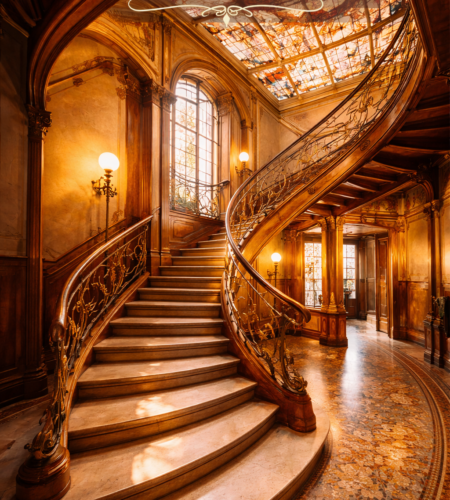
The Horta Museum is one of the most immersive Art Nouveau experiences in Brussels because it isn’t a gallery about Art Nouveau—it’s the real thing: Victor Horta’s own house and studio, built 1898–1901, with the interior largely preserved (mosaics, stained glass, furniture, wall paintings).
If you want a visit that feels personal, detailed, and “crafted down to the doorknob,” the Horta Museum delivers—just know it’s a small house museum with strict capacity and rules (timed online booking, no phones/cameras, lots of stairs).
Why the Horta Museum is worth it ✅🏛️
It’s UNESCO-listed architecture you can actually walk through
The Horta house-workshop is part of UNESCO’s “Major Town Houses of the Architect Victor Horta (Brussels)” World Heritage listing.
You get “total design,” not just rooms
Horta designed spaces where structure, light, ironwork, wood, and decorative arts work together as one coherent environment—exactly the kind of “total work of art” experience Brussels is famous for.
It’s intentionally small and controlled (so it stays authentic)
Capacity is limited to 15 people every 15 minutes, and visits are only possible by online booking—this keeps the house from being overwhelmed.
What you’ll see inside 🗺️✨
1) The stairwells and light choreography (the “signature” moment)
The museum describes the visit as a room-by-room tour across eleven half-levels arranged around three stairwells—so the experience is basically a vertical journey through light, curves, and craft.
2) Original Art Nouveau details everywhere
Expect:
- stained glass and colored light effects
- mosaics and patterned surfaces
- custom woodwork, iron curves, and integrated furniture
All of this is central to why the museum feels more like “stepping into a design idea” than visiting a historic home.
3) Temporary exhibitions (bonus, but not the main reason)
The museum notes that temporary exhibitions exist and (importantly) the temporary exhibition area is accessible to people with reduced mobility, unlike most of the historic house.
How the visit works (what to expect) ⏱️
The Horta Museum is not a “wander freely for hours” place. It’s a timed, controlled house visit.
Key practical facts:
- Online reservation required
- Visit lasts about 45 minutes
- Rooms close from 16:45 and the last session at 16:45 is restricted (house only; workshop not accessible in that last slot)
Quick planning table ✅
| What you want | What to book | How long to plan |
|---|---|---|
| First-time “must see” | Standard timed session | ~45 min inside + 15–30 min buffer |
| Best atmosphere | Mid-afternoon weekday slot | ~1.5 hours total including arrival |
| Combined Art Nouveau day | Pair with another Art Nouveau site nearby | Half-day |
How to get there 🚋🚌📍
Address: Rue Américaine 27, 1060 Saint-Gilles, Brussels.
Public transport (recommended) 🚋🚌
Brussels Museums lists multiple lines serving the museum area:
- Trams: 4, 10, 51, 81, 92, 97
- Buses: 54, 60, 136
Because routes and disruptions change, use STIB/MIVB’s official tools (maps + route planning) before you go.
Taxi / rideshare 🚕
A taxi is convenient if you’re protecting a tight time slot—just arrive early enough to handle entry flow and lockers.
Hours / Operating times ⏱️
Opening hours (official):
- Mon: closed
- Tue–Fri: 14:00–17:30
- Sat & Sun: 11:00–17:30
Closures: the museum lists specific closure dates (including major holidays). Always verify for your exact travel dates.
Tickets / prices / cards 💳🎟️
Standard price you can rely on
- Adult: €14
Free / reduced options (selected examples from the official list)
- Child under 6: free
- Job-seeker: €6
- European disability card holder: €3.50
- Article 27: €1.25
Free entry day ✅
- Free admission: first Sunday of the month (not on public holidays)
Passes accepted
- museumPASSmusées
- Art Nouveau Pass
Tips / common mistakes ✅⚠️
⚠️ 1) Booking too late
Timed entry + small capacity means popular slots can disappear. Book as soon as your dates are fixed.
⚠️ 2) Forgetting the “no phone / no camera” rule
The museum prohibits phones and cameras, and asks visitors to leave smartphones in lockers.
Why? The museum explains it’s partly about protecting fragile spaces (especially the stairway) and avoiding bottlenecks and accidents.
✅ 3) Plan for stairs (this is a vertical house)
The museum explicitly notes the historic interior has eleven half-levels and narrow stairwells, and the listed building cannot accommodate people with reduced mobility (while the temporary exhibition area is accessible).
✅ 4) Don’t pick the last session if you want “everything”
The 16:45 session is restricted (workshop no longer accessible).
✅ 5) Know about rare photo opportunities
The museum notes a specific exception: on the last Friday of each month, photography can be possible by appointment, in the morning, and non-commercial.
FAQ
Do I need to reserve in advance?
Yes—reservation is required, and visits are only possible via online booking.
How long is the visit?
About 45 minutes (plus your arrival/locker buffer).
Can I take photos inside?
Generally no—phones and cameras are prohibited, for safety/preservation reasons (with rare appointment-based exceptions).
Is the Horta Museum part of UNESCO World Heritage?
Yes—Horta’s house-workshop is included in UNESCO’s “Major Town Houses of the Architect Victor Horta (Brussels)”.
Is it accessible for visitors with limited mobility?
The museum states the historic house-workshop layout does not allow accommodating people with reduced mobility; the temporary exhibition area is accessible.
Conclusion
The Horta Museum is the most “authentic Art Nouveau immersion” you can do in Brussels: Victor Horta’s real home and studio, preserved as a coherent design world and protected through strict timed entry. Book ahead, arrive ready for stairs and no-phone rules, and you’ll get a 45-minute visit that feels like stepping inside Brussels’ Art Nouveau DNA.
Comments