
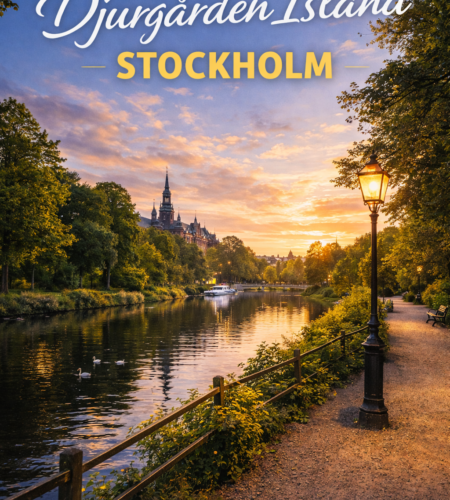
If you want one place that feels like “Stockholm in fast-forward,” Djurgården Island Stockholm is the move: a green royal park packed with world-class museums, family attractions, waterfront paths, and easy boat rides—without ever leaving the city. It’s also one of the easiest areas to plan badly (arriving at peak time, overbooking museums, or walking the long way around). This guide gives you a practical, no-fluff plan.
📍 What is Djurgården Island Stockholm?
Djurgården is a major recreation and culture area in central Stockholm with a high concentration of popular museums and attractions. Visit Stockholm describes it as a long-loved destination for recreation and entertainment, historically tied to royal use and later opened to the public.
A few useful context points:
- 👑 Royal roots: Visit Stockholm notes that in the 16th century Djurgården was King Erik XIV’s private weekend hideaway for recreation and hunting.
- 🌿 Protected green core: The Royal Palaces site explains that Royal Djurgården (southern + northern) has been part of Sweden’s Royal National City Park since 1995, and the park is open all year round.
- 🧭 Why it’s a cheat code for visitors: “Nowhere in Stockholm will you find a higher concentration of popular attractions and museums,” according to Visit Stockholm.
✅ Top things to do on Djurgården Island Stockholm
Think in clusters, not “one attraction at a time.” Djurgården is best when you combine one “anchor museum” + one fun stop + one nature/fika break.
🏛️ Museum anchors (pick 1–2, not 4)
- Vasa Museum (the 17th-century warship): seasonal opening hours are published (e.g., Sep–May 10:00–17:00, Wednesdays later; Jun–Aug longer days).
- ABBA The Museum (interactive music experience): publishes Tickets 2026 price ranges and opening hours.
🎡 Family + “fun Stockholm” energy
- Gröna Lund (amusement park): tickets vary by type (“Entrance” vs “Ticket to Ride”), with prices shown as from 130 SEK on the official tickets page.
- Junibacken (Astrid Lindgren story world): tickets are advertised from 140 SEK, and they publish planning notes (closed days, peak-day waiting times, etc.).
🌳 Nature, walks, and “reset your brain” breaks
- Waterfront promenades + canals: Djurgården is built for low-effort, high-reward walking—especially if you want a calmer contrast to Gamla Stan crowds.
- Royal park feel: The Royal Palaces site highlights the area’s natural + cultural significance and its role as a major recreation area.
🗺️ Simple “do it right” itineraries
⏱️ 2–3 hours (quick but satisfying)
✅ Ferry/tram in → short waterfront walk → one museum (Vasa or ABBA) → coffee/snack → ferry back.
🕰️ Half day (the sweet spot)
✅ Vasa Museum + one nearby fun stop (ABBA or Junibacken) + a long walk along the water.
🌅 Full day (without burnout)
✅ Morning: museum anchor
✅ Midday: nature + lunch/fika
✅ Afternoon: second attraction
✅ Evening: ferry back as a mini “harbor cruise”
🌧️ Rainy-day plan
Pick indoor-heavy: Vasa + ABBA, and keep walks short between entrances.
🚇 How to get to Djurgården Island Stockholm
You’ve got four “clean” ways: walk, tram/bus, ferry, or taxi.
⛴️ Ferry (the most Stockholm option)
- The Vasa Museum’s official “getting here” page notes Djurgården ferry line 82 departs from Slussen year-round, and you can get off at Allmänna gränd (then walk to nearby attractions).
- SL’s official guidance states you travel with an SL ticket on all lines, including commuter ferry line 82 (the Djurgården ferry).
🚋 Tram / 🚌 bus
Royal Djurgården’s official “Getting here” page suggests planning via SL and lists major Djurgården stops you can target (e.g., Djurgårdsbron, Skansen, Rosendalsvägen, Waldemarsudde, Djurgårdsbrunn).
🚶 Walk / bike
Royal Djurgården also explicitly says it’s easy to reach by walking or cycling, as well as ferry, bus, or tram.
📍 Transport quick table
| Option | Best for | What to do |
|---|---|---|
| ⛴️ Ferry 82 | Scenic + fast + fun | Slussen → Allmänna gränd (SL ticket valid) |
| 🚋 Tram / 🚌 Bus | Simple from central | Aim for Djurgårdsbron / Skansen / Waldemarsudde stops |
| 🚶 Walk | Budget + views | Cross via Djurgårdsbron and stroll in |
| 🚕 Taxi | Door-to-door | Best if time is tight or with kids |
⏱️ Hours / operating times
🌿 Djurgården itself
The Royal Palaces site states the park is open all year round.
Meaning: the island’s paths and green areas are always accessible, but attractions have their own schedules.
🏛️ Major attractions (always confirm for your date)
- Vasa Museum: publishes seasonal opening hours (Sep–May and Jun–Aug patterns + holiday exceptions).
- ABBA The Museum: publishes opening hours and “Tickets 2026” info.
- Junibacken: publishes planning info including closed days and peak-day notes.
- Skansen: notes opening hours/prices vary by season and that online is usually cheaper; children 0–15 are free (with a booked ticket).
💳 Tickets / prices / cards for Djurgården Island Stockholm
✅ The island is free — attractions are not
Walking Djurgården costs nothing. Your spending is almost entirely about which attractions you choose.
🎟️ Realistic “price anchors” (SEK)
- Vasa Museum: adult admission is listed at 195 SEK in one season, with kids 0–18 free (check seasonal pricing).
- ABBA The Museum (Tickets 2026): adult ranges 249–329 SEK, with other categories listed (family/student/child).
- Gröna Lund: official tickets page shows options and pricing “from 130 SEK” (varies by ticket type/date).
- Junibacken: tickets advertised from 140 SEK (plus theatre seat reservation guidance).
- Skansen: price varies by season; children 0–15 free but must book a free ticket.
🚇 Do you need an SL pass?
If you’ll ride multiple times (metro/tram/bus/ferry), an SL travelcard can pay off—especially since SL explicitly includes commuter ferry line 82 under SL tickets.
⚠️ Tips / common mistakes (what people do wrong)
⚠️ Mistake #1: Trying to “do everything” in one day
Djurgården has too many highlights. Pick 1–2 paid attractions max, then spend the rest on walks and atmosphere.
⚠️ Mistake #2: Ignoring ferry strategy
People default to metro + long walks, then wonder why they’re tired. Use the ferry at least once—it’s transportation and sightseeing. SL recognizes ferry 82 as part of the ticketed network.
⚠️ Mistake #3: Arriving at peak time without a sequence
Midday in summer can be crowded. If you can, do:
- Morning museum → midday nature/lunch → afternoon attraction.
⚠️ Mistake #4: Forgetting seasonal reality
Some attractions and ticket types change by season. Skansen explicitly notes price varies seasonally; ABBA lists 2026 ranges; Vasa lists seasonal hours.
❓ FAQ
Is Djurgården Island Stockholm worth it if I only have 1 day in Stockholm?
Yes—because it concentrates major museums and green space in one easy area.
Is Djurgården open in winter?
The park is open all year round; individual museums/attractions set their own schedules.
What’s the easiest way to reach Djurgården?
Ferry 82 from Slussen is one of the simplest and most scenic, and it’s included with SL tickets.
Do I need a separate ferry ticket?
If you’re using SL public transport tickets, SL states you travel with an SL ticket on all lines, including commuter ferry line 82 (Djurgården ferry).
What are the “must-do” attractions on Djurgården?
Common first picks: Vasa Museum, Skansen, ABBA The Museum, Gröna Lund (seasonal), Junibacken (families).
How much time should I plan?
Half day is ideal; full day if you add multiple attractions plus long walks.
Conclusion
Djurgården Island Stockholm is the most efficient way to combine Stockholm’s culture and nature: start with one anchor museum, use the ferry at least once, pace your day with a waterfront break, and keep your plan realistic (1–2 paid attractions max). It’s royal-park calm with big-ticket highlights—without the stress of crossing the city all day.
Comments