
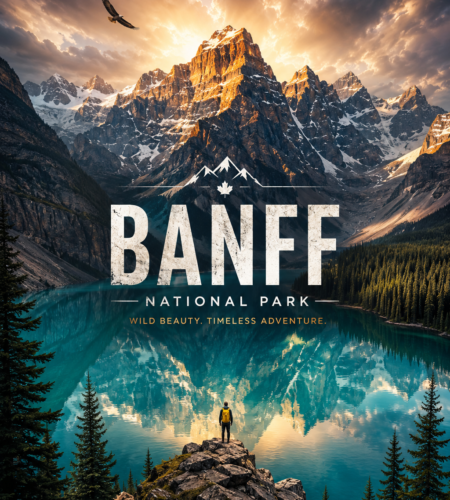
Banff has the rare problem of being exactly as beautiful as everyone says. The town sits inside Banff National Park, wrapped by the Canadian Rockies, with glacial lakes, elk-crossed streets, ski slopes, hot springs, old railway-hotel glamour, and trailheads close enough to make a casual morning feel cinematic. It is also crowded, expensive, weather-sensitive, and governed by rules that matter. The difference between a dreamy Banff trip and a frustrating one usually comes down to planning.
Explore the Complete Banff Guide
Use these companion pages to plan the trip in detail:
- Banff Weather by Season and Month: How Climate Shapes Trails, Lakes, Roads, Hotels, and Prices
- How to Get to Banff From the Airport: Calgary, Edmonton, Vancouver, Kelowna, Cranbrook, Shuttles, Cars, and Smarter Routes
- Banff National Park Travel Guide: How to Plan the Lakes, Trails, Drives, Wildlife, Hotels, and Days That Actually Work
- The Best Restaurants in Banff: Where to Eat for Fine Dining, Mountain Views, Local Flavor, Brunch, Beer, and Casual Nights
- The Best Hotels in Banff: Luxury Lodges, Lake Louise Icons, Downtown Bases, Spa Stays, Ski Hotels, and Seasonal Price Strategy
- Banff Shopping Guide: Gifts, Indigenous Art, Outdoor Gear, Groceries, Liquor, Local Goods, Galleries, and What to Buy
- Banff Prices: A Complete Cost Analysis for Hotels, Food, Park Passes, Parking, Shuttles, Activities, Groceries, Skiing, and Realistic Budgets
- Banff Rules: The Complete Visitor Guide to Park Passes, Wildlife, Drones, Dogs, Camping, Fires, Alcohol, Watercraft, Trails, Parking, and Fines
- Banff Transport Hub Guide: Airports, Shuttles, Transit Stations, Parking, Taxis, Bike Rentals, Ski Shuttles, Addresses, and How to Move Around
- Every Banff National Park Hike Worth Planning: The Complete Guide to Trails, Lakes, Passes, Viewpoints, and Backcountry Routes
This is the overview: the piece to read before you start booking hotels, shuttle tickets, restaurants, rental cars, or hiking days.
Key Takeaways
- Banff is easiest when you plan transportation, lodging, and lake access before building daily itineraries.
- Downtown Banff is the best first base for most no-car or first-time visitors.
- Moraine Lake requires shuttle, transit, tour, lodge, or accessible access for most travelers.
- July through September are the classic turquoise-lake and hiking months; winter is a completely different but equally valid trip.
- Accommodation is the biggest cost risk, especially in peak summer and holiday periods.
What Banff Actually Is
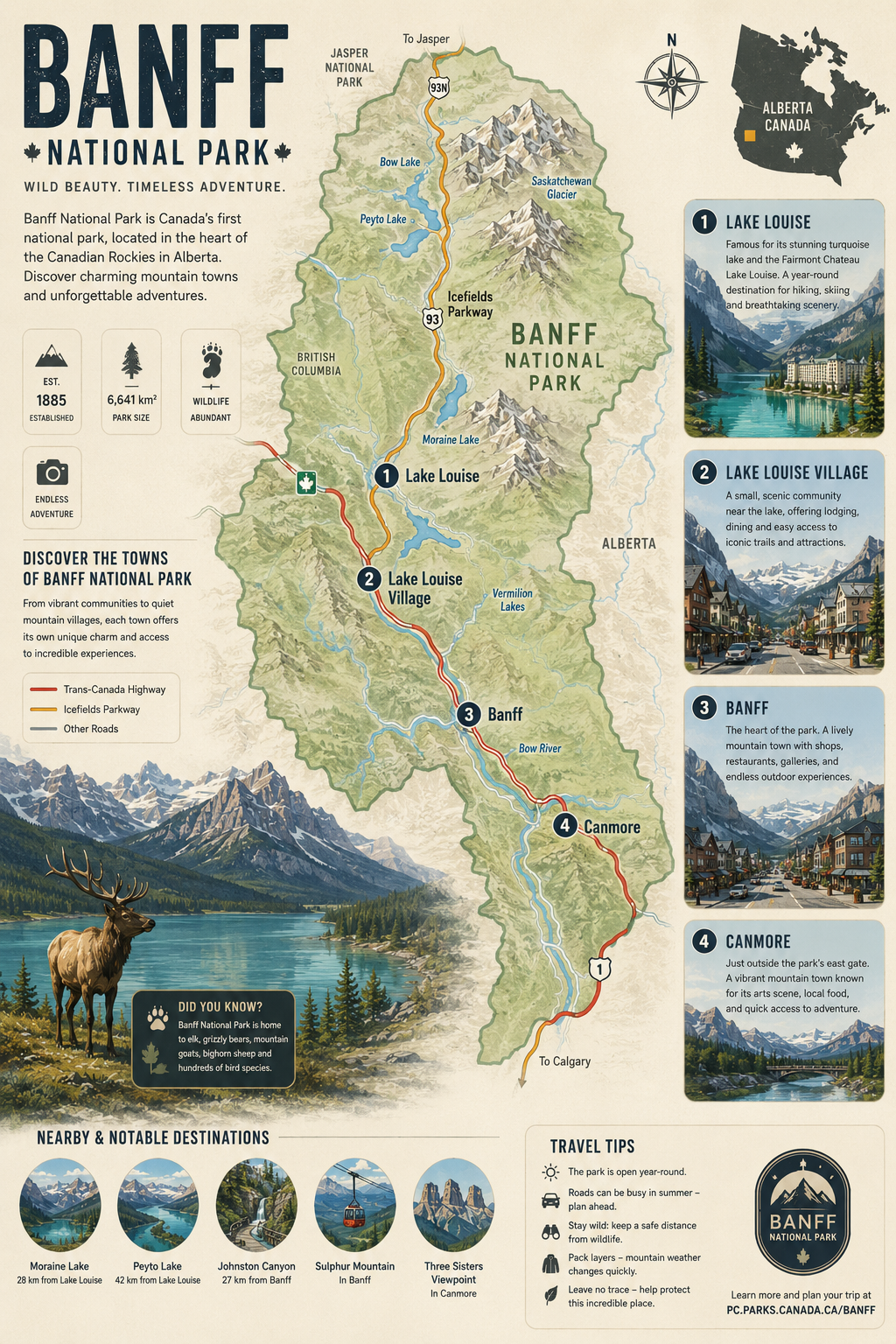
Banff is both a mountain town and the gateway to a much larger national park. The Town of Banff is compact, walkable, and full of hotels, restaurants, tour desks, shops, outfitters, galleries, and transit stops. Banff National Park is the bigger stage: Lake Louise, Moraine Lake, the Icefields Parkway, Bow Lake, Peyto Lake, Johnston Canyon, Lake Minnewanka, Sunshine Meadows, wildlife corridors, campgrounds, ski areas, and hundreds of kilometers of trails.
That distinction matters. A hotel “in Banff” may mean downtown Banff Avenue, a quiet property on Tunnel Mountain, a castle-like resort near Bow Falls, a high-end retreat near the hot springs, or a room 45 minutes away in Lake Louise. Each is valid. Each changes how your days work.
The smartest way to plan Banff is to pick your base, then build each day around one geographic zone rather than trying to cross the park repeatedly.
The Big Planning Truth
Banff is not hard to visit, but the classic sights are capacity-managed. You cannot simply drive to Moraine Lake in summer and expect to park. Moraine Lake Road is closed to personal vehicles year-round, with limited exceptions. Lake Louise parking is limited and increasingly difficult in peak season. Parks Canada shuttles, Roam Public Transit, hotel shuttles, and licensed commercial operators are now central to the Banff experience.
That is not bad news. It means you can have a better trip by treating transportation as part of the itinerary, not an afterthought.
Banff at a Glance
| Decision | Best Choice for Most First-Timers | Why It Works |
|---|---|---|
| Airport | Calgary International Airport | Closest major airport and strongest shuttle network |
| First base | Downtown Banff | Restaurants, transit, shops, and tours are easiest without a car |
| Lake day | Parks Canada shuttle or Roam plan | Moraine Lake is not a personal-vehicle destination |
| Best broad hiking window | July to September | Highest chance of open alpine trails and thawed lakes |
| Best value window | April, May, November, select winter weekdays | Lower hotel pressure, but more limited conditions |
| Biggest budget risk | Late-booked summer lodging | Accommodation is the cost that can distort the whole trip |
| Biggest planning mistake | Trying to see everything | Banff rewards fewer, better-planned days |
Best Time to Visit Banff
Banff is a four-season destination, but each season sells a different version of the park.
Summer, from late June through August, is the postcard season. Lakes glow turquoise, long days make ambitious itineraries possible, patios are open, and most higher hiking routes begin to come into condition. This is also when hotel rates, parking pressure, and shuttle demand are at their highest.
September is the connoisseur’s month. The weather cools, the light sharpens, larch season arrives in the alpine, and hiking can be exceptional. It is still busy, especially on weekends and during peak larch weeks, but the mood is more adult and less frantic than July.
October and November are transitional. October can be gorgeous or snowy. November is quieter, often cheaper, and more limited: some summer roads and lake access windows are over, while the full winter mood has not always arrived in town.
Winter, roughly December through March, belongs to skiers, snowboarders, frozen-lake romantics, hot-spring people, and travelers who like a mountain town after dark. Banff Sunshine, Lake Louise Ski Resort, and Mt. Norquay make the area one of Canada’s great ski bases. Winter is not a budget secret during holidays or ski weekends, but it can feel far more spacious than summer.
Spring, especially April and May, is misunderstood. In town, it may feel mild. Higher trails can still hold snow, lakes may still be frozen, and mud season is real. Prices can soften, but the tradeoff is a more selective activity list.
The Essential Banff Experiences
For a first trip, prioritize these:
- Lake Louise and Moraine Lake
Lake Louise is open year-round, though the experience changes completely between skating season, thaw, turquoise summer, fall color, and early winter. Moraine Lake is generally a June-to-mid-October experience, weather permitting, and requires shuttle, transit, tour, lodge access, or accessible-parking eligibility.
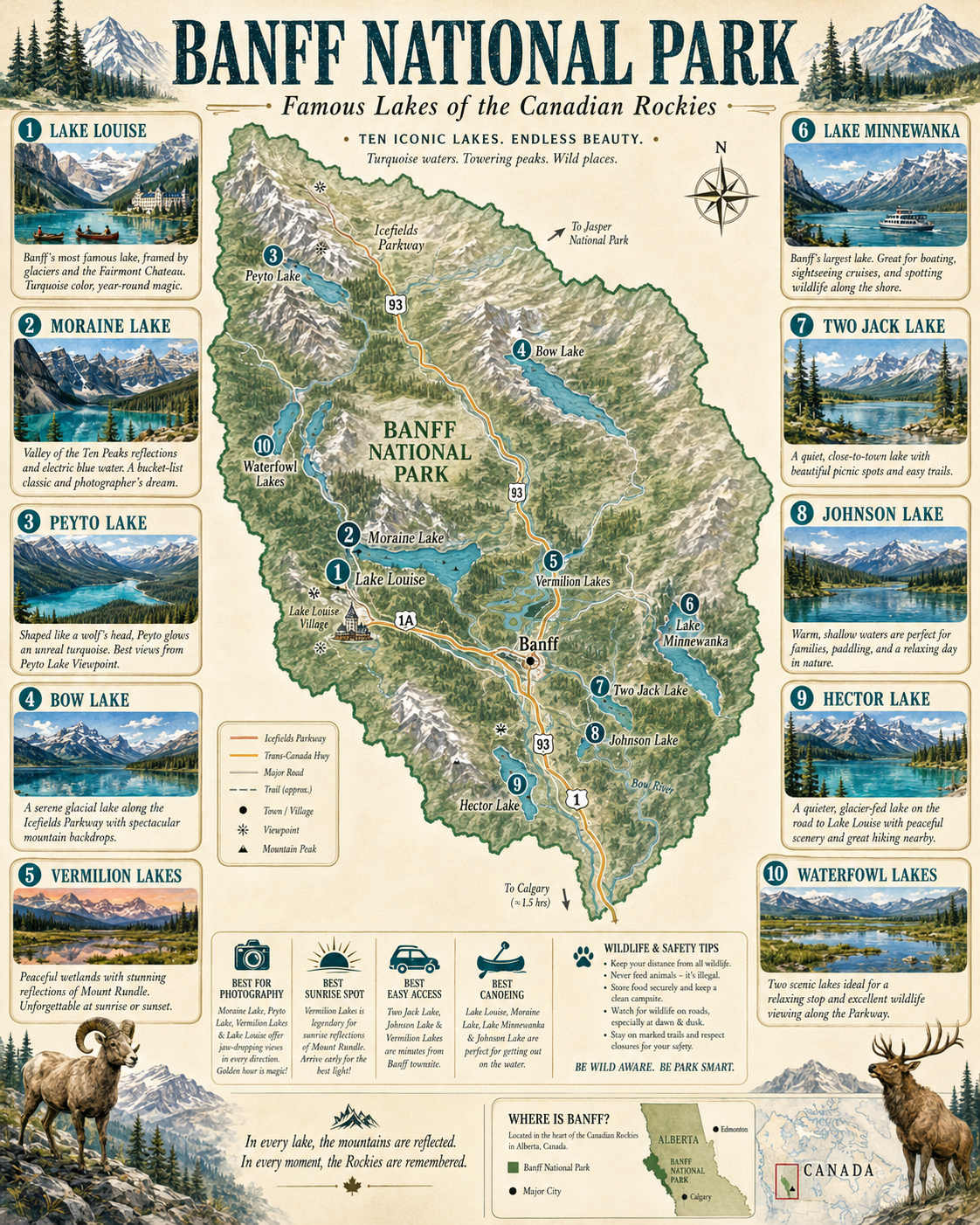
- The Icefields Parkway
The drive north from Lake Louise toward Jasper is one of the great mountain roads in North America. Even if you do not go all the way to Jasper, build time for Bow Lake, Peyto Lake, glacier viewpoints, and unplanned pullouts. Weather can change quickly, and winter driving deserves respect.
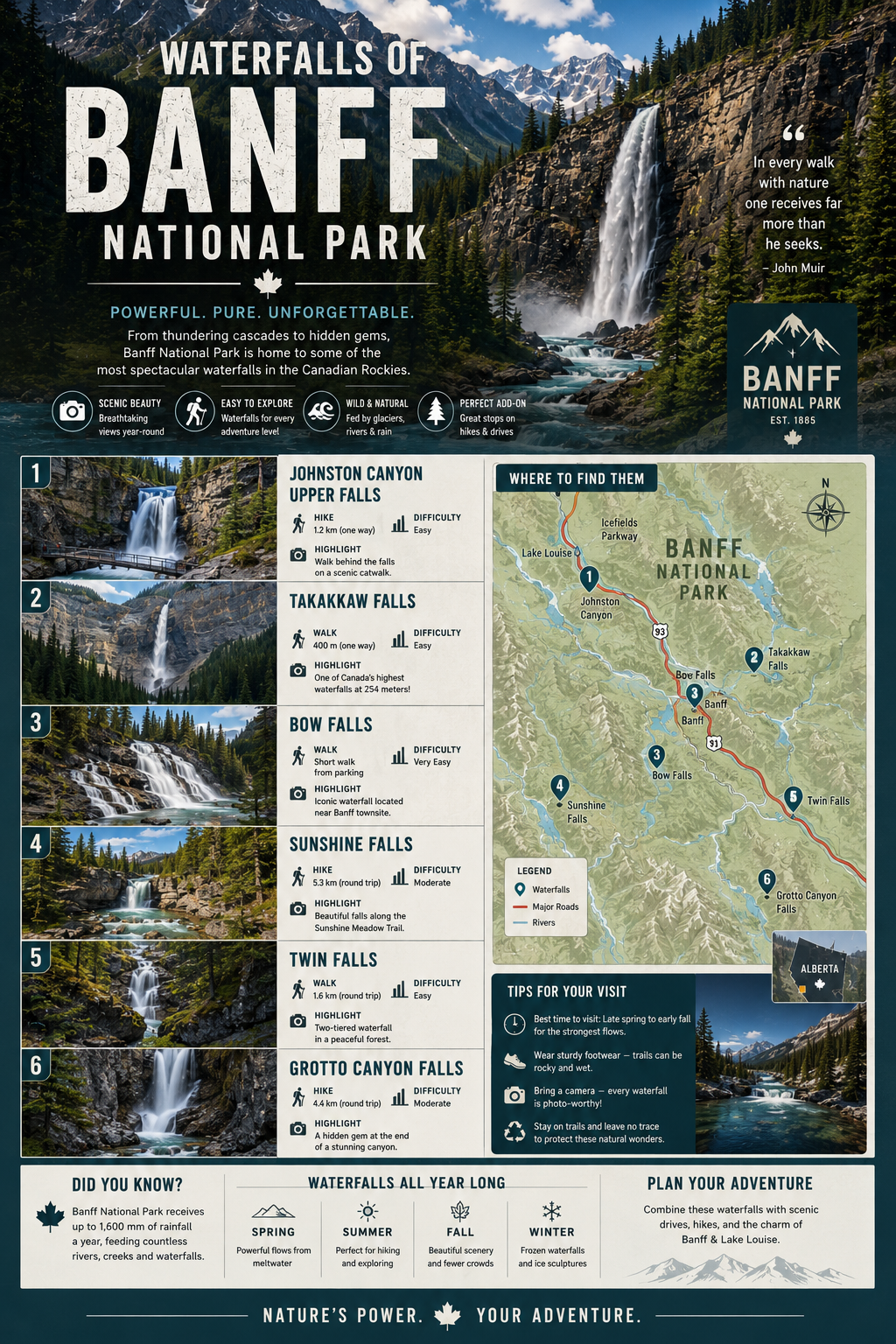
- Johnston Canyon
A classic because it deserves to be. Go early, go late, or go off-season. In winter, traction devices can make the difference between delight and slapstick.
- Banff Gondola and Sulphur Mountain
The Banff Gondola is not wilderness, and that is the point. It is polished, efficient, scenic, and useful for multi-generational groups or travelers who want a summit view without a big hike. Book ahead for better pricing and timing.
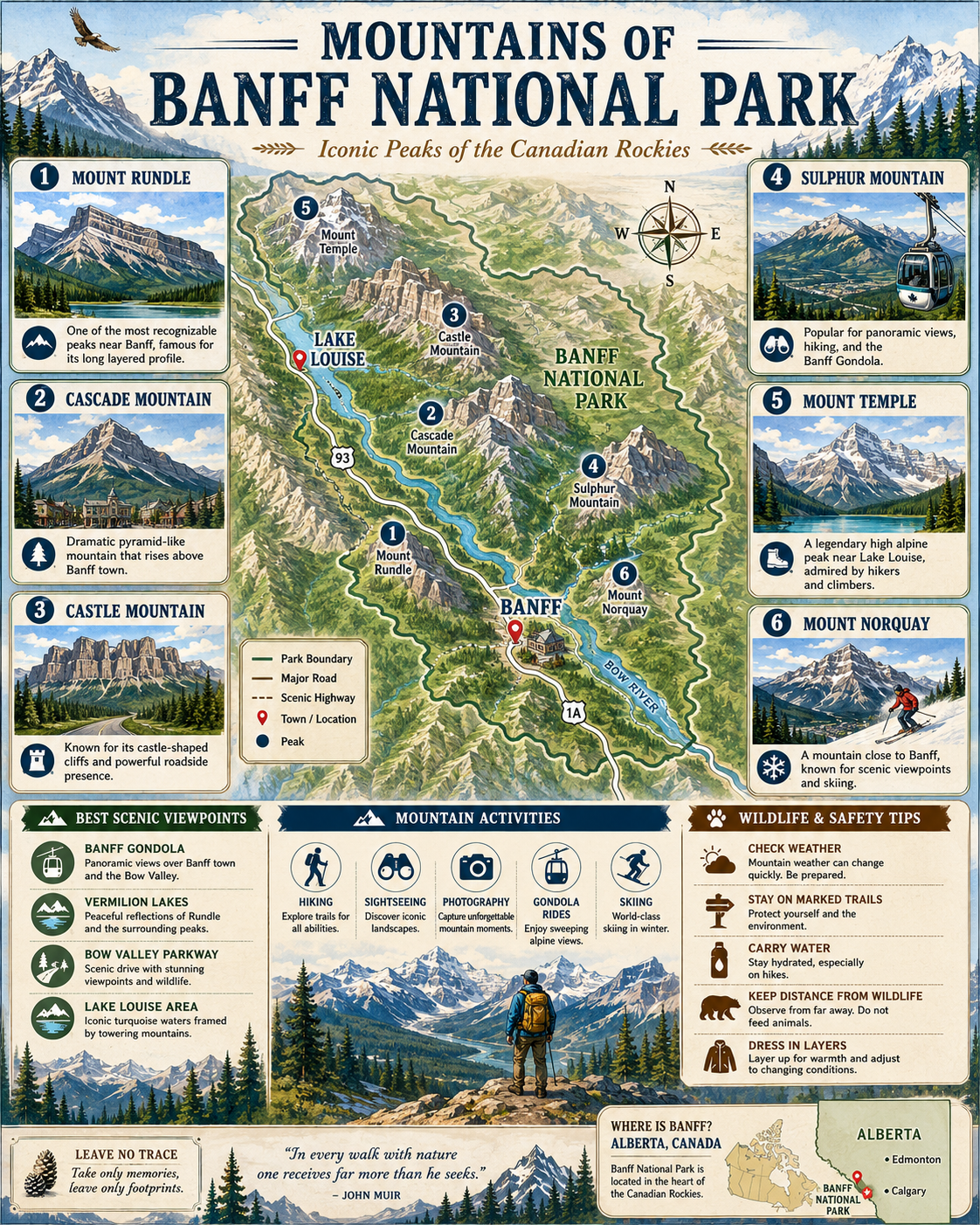
- Lake Minnewanka and the Bow Valley
Lake Minnewanka, Two Jack Lake, Cascade Ponds, Vermilion Lakes, and the Bow River are perfect for easier days. They are also good reminders that Banff is not only Lake Louise and Moraine Lake.
- Downtown Banff
Banff Avenue can feel touristy, but it is also genuinely useful. You can rent gear, buy bear spray, eat well, shop for Canadian goods, visit galleries, arrange tours, catch buses, and walk to the Bow River.
Where to Stay
Downtown Banff is best for first-timers without a car, restaurant-focused travelers, and anyone who wants to walk everywhere at night. It is convenient, lively, and expensive in peak season.
Tunnel Mountain is better for families, longer stays, and visitors who want quieter evenings while still being a short bus or drive from town.
The Banff Springs and Sulphur Mountain area is best for resort travelers, spa weekends, golf, scenery, and a classic luxury stay.
Lake Louise is best for lake-first itineraries, alpine hiking, early starts, and travelers who want to wake closer to the western side of the park. Dining and nightlife are more limited than in Banff town.
Canmore is not in Banff National Park, but it is often the practical choice. It has more space, many condo-style stays, good restaurants, and lower average accommodation pressure. The tradeoff is commuting into the park.
How Expensive Is Banff?
Banff is one of Canada’s most expensive leisure destinations. Accommodation is the driver. Summer hotel rates can be startling, and recent reporting has put Banff average room rates in record-high territory. Travelers who assume Banff will price like a normal small town are usually surprised.
For 2026, there is one unusual break: Parks Canada and tourism sources report free national park admission from June 19 to September 7, 2026 through the Canada Strong Pass initiative, with a discount on Parks Canada camping and overnight stays. Outside that window, daily park admission and Discovery Pass fees apply.
Do not let the free-entry window fool you into thinking the whole trip is cheap. Paid parking in downtown Banff, shuttles, gondola tickets, restaurant meals, rental cars, and hotel rates still add up.
Getting Around Without Regret
If you stay downtown and plan well, Banff can be surprisingly car-light. Roam Transit connects the townsite with major attractions, Canmore, Lake Louise, Johnston Canyon seasonally, Lake Minnewanka, and the Banff Gondola area. Parks Canada shuttles are the key for Lake Louise and Moraine Lake. Many hotels include local transit passes or shuttles.
A rental car is still useful for flexible photography stops, Icefields Parkway days, shoulder-season travel, families carrying a lot of gear, and travelers staying outside the core. But in peak summer, a car is not a magic key. It can become an expensive object you spend the day trying to park.
A Smart First Banff Itinerary
For three nights:
Day 1: Arrive from Calgary, settle into Banff, walk the Bow River, visit Surprise Corner or Vermilion Lakes at sunset, and have dinner in town.
Day 2: Use a shuttle or transit plan for Lake Louise and Moraine Lake. Add a manageable hike such as Lake Agnes if conditions, fitness, and timing allow.
Day 3: Drive or tour the Icefields Parkway to Peyto Lake and Bow Lake, or keep it closer with Johnston Canyon and the Bow Valley Parkway. End with hot springs or a rooftop hot pool if your hotel has one.
Day 4: Take the Banff Gondola, shop for gifts, have a strong lunch, and transfer back to Calgary.
For five to seven nights, add a Lake Louise overnight, a Canmore meal, a dedicated hiking day, a rest day around Lake Minnewanka, and one dinner that feels special rather than merely convenient.
What Many Visitors Get Wrong
They book the cheapest hotel without checking location. They leave Moraine Lake logistics until the last minute. They assume May is summer in the alpine. They try to drive everywhere in July. They underestimate dinner reservations. They do not carry layers. They forget that wildlife rules are laws, not suggestions. They buy a drone shot in their imagination and then discover drones are prohibited for recreational use in national parks.
Banff rewards a calmer traveler. Choose fewer places. Start earlier. Use transit when it beats parking. Leave empty time for weather. Spend money where it improves the trip, not where it only fixes a planning mistake.
Editor’s Verdict
Banff is best for travelers who can tolerate logistics in exchange for scale. It is not the cheapest Rockies base, the quietest alpine town, or the easiest place to improvise in July. It is, however, the rare destination where the most famous views still have the power to exceed expectation.
The ideal first trip is not maximal. It is three to five nights, one major lake day, one scenic drive, one mountain-view meal, one flexible weather window, and a hotel location chosen for how you will actually move. That version of Banff feels expensive but coherent. The overpacked version feels expensive and frantic.
FAQ
Is Banff worth visiting if I only have two or three days?
Yes, if you plan tightly. Stay downtown, book lake transportation early, and choose either the Icefields Parkway or Johnston Canyon/Banff Gondola rather than trying to do everything.
Do I need a car in Banff?
Not always. A car helps for the Icefields Parkway, Yoho, shoulder seasons, and flexible photography stops. For downtown Banff, Lake Louise, Moraine Lake, the gondola, and many local attractions, transit and shuttles can be easier.
What is the best month to visit Banff?
July, August, and September are the safest months for the classic turquoise-lake and hiking trip. January through March are best for winter and skiing. May and November are better for value than for full access.
Is Banff expensive?
Yes. Hotels are the largest cost, followed by rental cars, restaurants, paid attractions, and parking. Hiking, scenic drives, town walks, and many viewpoints are low-cost once access is handled.
Can I visit Moraine Lake without a shuttle?
Most visitors need a shuttle, Roam Public Transit, a licensed commercial operator, a guided tour, lodge access, or accessible-parking eligibility. Personal vehicles are restricted year-round on Moraine Lake Road.
Bottom Line
Banff is famous because the scenery really does perform. But the best trips are not built on scenery alone. They are built on timing, transportation, lodging strategy, weather awareness, and respect for a national park that is both heavily visited and ecologically fragile.
Plan it like a once-in-a-lifetime trip, even if you intend to come back. Banff has a way of making that intention feel reasonable.
Related Guides
- Read the month-by-month planning guide: Banff Weather by Season and Month
- Compare airport and shuttle options: How to Get to Banff From the Airport
- Build the full itinerary: Banff National Park Travel Guide
- Choose where to stay: The Best Hotels in Banff
- Understand the budget: Banff Prices and Cost Analysis
Source Notes
- Parks Canada Banff National Park fees and passes: https://parks.canada.ca/pn-np/ab/banff/visit/tarifs-fees
- Parks Canada park passes and Canada Strong Pass information: https://parks.canada.ca/pn-np/ab/banff/visit/passer-passes
- Parks Canada Lake Louise and Moraine Lake shuttle information: https://parks.canada.ca/pn-np/ab/banff/visit/parkbus/louise
- Parks Canada seasonal closures and restrictions: https://parks.canada.ca/pn-np/ab/banff/visit/fermetures-closures
- Banff & Lake Louise Tourism travel information: https://www.banfflakelouise.com/travel-information
- Town of Banff visitor parking: https://banff.ca/1184/Visitor-Pay-Parking
- Roam Transit fares and routes: https://roamtransit.com/fares/