
Last Update: June 9, 2026
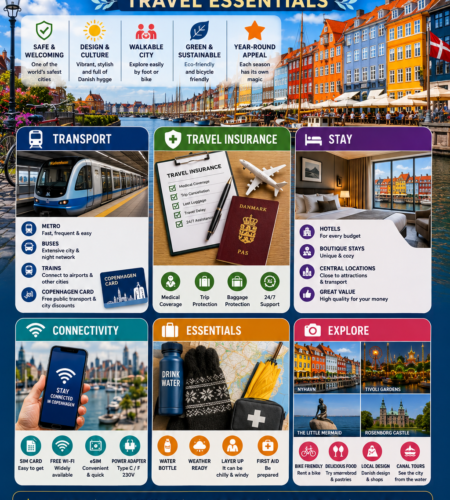
Copenhagen is one of Europe’s most comfortable city-break capitals: compact, bike-friendly, clean, design-focused and easy to navigate without a car. The city combines royal palaces, harbour swimming, Nordic food, world-class museums, coffee shops, independent boutiques, modern architecture, historic streets and one of the best public transport systems in Europe.
It is also a destination where practical planning saves money. Copenhagen is not cheap, airport tickets use zones, Danish kroner are used instead of euros, tax-free shopping has strict rules, and cycling etiquette matters more than many first-time visitors expect. In 2026, non-EU travellers should also pay attention to EU border changes, including the Entry/Exit System (EES) and the planned ETIAS travel authorisation.
This Copenhagen travel essentials guide gives visitors a complete pre-arrival foundation: Denmark entry rules, Schengen basics, CPH Airport, airport transfers, Metro, trains, buses, City Pass, Copenhagen Card, money, VAT refund, safety, local laws, health, tap water, weather, packing, neighbourhoods, day trips, cycling, car rental and essential contacts.
All prices are in Danish kroner (DKK). Rules, fares, airport procedures, train timetables, visa policies, border systems, tax refund requirements and travel advisories can change. Always confirm final details with official Danish government portals, the Danish Immigration Service, the EU Travel Europe portal, Copenhagen Airport, DOT/Publictransport.dk, DSB, VisitCopenhagen, Danish Customs, your airline and your own government’s travel advisory before travelling.
Current Travel Advisory Note
As of June 9, 2026, Copenhagen remains a highly practical and generally visitor-friendly destination, but travel content should still include official safety context.
The U.S. Department of State lists the Kingdom of Denmark at Level 2: Exercise Increased Caution due to terrorism. The UK FCDO Denmark page checked on June 9, 2026 was current and noted updated information about delays at passport control for passengers flying to and from Copenhagen Airport. Government of Canada travel advice notes petty crime risks in large cities, especially around tourist areas and public transportation, and also highlights climate-related disruption such as coastal flooding.
Before departure:
- Check your own government’s Denmark travel advisory.
- Allow extra time at Copenhagen Airport during busy travel periods.
- Keep valuables close on trains, Metro platforms, restaurants, hotel lobbies and tourist streets.
- Keep copies of your passport, travel insurance and booking confirmations.
- Check whether EES border processing could affect your arrival or departure.
- If travelling visa-free to Europe later in 2026, monitor the official EU ETIAS page before booking.
Quick Answer: Copenhagen Travel Essentials
For most first-time visitors, Copenhagen is easiest when planned around these basics:
| Topic | Best Practical Answer |
|---|---|
| Airport | Copenhagen Airport (CPH), in Kastrup, very close to the city |
| Best airport transfer | Metro M2 to Kongens Nytorv/Nørreport or train to Copenhagen Central Station |
| Airport ticket | Usually a 3-zone public transport ticket for central Copenhagen |
| Public transport pass | City Pass Small for frequent travel in central Copenhagen and airport zones |
| Sightseeing pass | Copenhagen Card if you will visit multiple paid attractions |
| Currency | Danish krone (DKK), not euro |
| Card payments | Very common; keep a backup card |
| VAT | Standard Danish VAT is 25% of the net price, equal to 20% of an inclusive retail price |
| VAT refund | Possible for eligible non-EU residents on goods over DKK 300 |
| Emergency number | 112 for life-threatening emergencies |
| Non-emergency police | 114 |
| Medical helpline in Capital Region | 1813 before going to emergency care |
| Tap water | Safe, high quality and widely available |
| Best season | May to September for long days and outdoor life; December for Christmas atmosphere |
| Best way to move locally | Walk, Metro and bike if confident |
| Car needed? | No, unless doing rural day trips outside easy rail routes |
If you only remember one thing: stay near a Metro or S-train station, use public transport from CPH, check the weather daily, keep your phone charged for mobile tickets, and do not treat Copenhagen cycling lanes like sidewalks.
Copenhagen at a Glance
Copenhagen is the capital of Denmark and the main urban centre of the Danish island of Zealand. It sits on the Øresund, facing Malmö in Sweden across the bridge. The city’s scale is ideal for short trips: many key areas can be reached by foot, bike, Metro, S-train or harbour bus.
Why Copenhagen Works So Well for Visitors
- Copenhagen Airport is close to the city.
- Metro service connects the airport directly with major central areas.
- Public transport tickets can cover Metro, trains, buses and harbour buses within the right zones.
- English is widely spoken.
- Card payments are common.
- Tap water is safe.
- The city is compact enough for slow travel.
- Design, food, architecture, harbour life and cycling culture are part of the everyday experience.
What Makes Copenhagen Expensive
Copenhagen is expensive compared with many European capitals. Hotels, restaurants, taxis, coffee, cocktails and museum tickets can add up quickly. Public transport is reliable but not ultra-cheap for single trips. The key budget strategy is to choose accommodation carefully, use passes when they make sense, drink tap water, book popular restaurants early and avoid unnecessary taxis.
Ideal Length of Stay
| Trip Length | Best For |
|---|---|
| 1 day | Nyhavn, palace area, canal, Tivoli or a museum |
| 2 days | Classic city centre plus Christianshavn, harbour and food markets |
| 3 days | Strong first visit with museums, cycling and neighbourhood time |
| 4-5 days | Day trips to Louisiana Museum, Helsingør, Roskilde or Malmö |
| 1 week | Copenhagen plus Zealand, Swedish side and deeper food/design itinerary |
Entry Rules, Schengen Visa, EES and ETIAS
Denmark is part of the European Union and the Schengen Area. Entry rules depend on your nationality, passport, residence status, travel purpose and how long you plan to stay.
Schengen Short-Stay Rule
For many non-EU visitors, Denmark follows the Schengen short-stay rule:
- Up to 90 days in any 180-day period.
- The 90 days are shared across the Schengen Area, not reset by moving from one Schengen country to another.
- Tourism, family visits and short business visits may be allowed depending on nationality and documents.
- Work, residence, study and long stays require different permissions.
If you need a visa, Denmark normally issues a Schengen visa for short stays. According to Denmark’s Ministry of Foreign Affairs, you apply to the country that is your main destination; if time is equal in several Schengen countries, apply to the country of first entry.
Who May Need a Visa
You may need a Schengen visa if your passport nationality is on the visa-required list. The Danish Immigration Service provides the official guidance and application route through Newtodenmark.dk.
Typical visa application basics include:
- Passport valid for at least three months after intended departure from the Schengen Area.
- Passport issued within the previous 10 years.
- Two blank pages.
- Online application and signed cover letter where required.
- Biometric data at the visa application centre.
- Travel insurance, accommodation and itinerary documents.
- Proof of funds and return/onward travel.
Denmark’s Ministry of Foreign Affairs states that a Schengen visa application can normally be submitted no earlier than six months before intended entry and, as a rule, at least 15 days before intended entry.
Visa-Free Travellers
Many passport holders can visit Denmark and the Schengen Area visa-free for short stays, but visa-free does not mean rule-free. Border officers may still ask for:
- Valid passport.
- Return or onward ticket.
- Accommodation details.
- Travel insurance.
- Proof of funds.
- Purpose of visit.
- Evidence that you will leave before your permitted stay ends.
EES: Entry/Exit System
The EU Entry/Exit System (EES) affects non-EU and non-Schengen travellers entering participating European countries for short stays. It is designed to record entry and exit data electronically and may involve passport and biometric processing.
For Copenhagen travellers, the practical takeaway is simple:
- Allow extra time at border control.
- Keep your itinerary and accommodation details easy to access.
- Make sure your name and passport details match your bookings.
- If you are connecting through another Schengen airport before Copenhagen, EES processing may happen at your first Schengen entry point.
The UK FCDO page checked on June 9, 2026 specifically noted updated information about delays at passport control for passengers flying to and from Copenhagen Airport.
ETIAS: Planned Travel Authorisation
ETIAS is the planned EU travel authorisation for visa-exempt travellers entering 30 European countries. The official EU Travel Europe page states that ETIAS will start operations in the last quarter of 2026.
As of June 9, 2026:
- ETIAS is not something travellers should buy from unofficial websites.
- No action is required until the EU opens the official process.
- Travellers should monitor the official EU ETIAS page before late-2026 trips.
Greenland and Faroe Islands
Do not assume that a Denmark/Schengen trip automatically works the same way for Greenland or the Faroe Islands. Denmark’s visa information notes that Greenland and the Faroe Islands have specific visa handling. If your Copenhagen trip connects onward to either, check rules separately before booking.
Passport, Border Checks and Arrival Documents
For a smooth arrival, prepare a simple digital and offline travel folder.
Documents to Keep Ready
- Passport.
- Visa or residence permit, if applicable.
- Return or onward ticket.
- Hotel booking or host address.
- Travel insurance policy.
- Proof of funds if relevant.
- Conference or invitation letter, if relevant.
- Contact details for your accommodation.
- Copies of prescriptions if travelling with medication.
Passport Validity
The minimum Schengen passport requirement is usually validity for at least three months after the date you intend to leave the Schengen Area, with the passport issued within the previous 10 years. The U.S. Department of State recommends six months’ validity at the time of entry because immigration authorities may admit visitors for up to three months.
For SEO and reader safety, the simplest advice is:
Travel with at least six months’ passport validity when possible, even if the formal rule for your case is shorter.
Border Tips at CPH
- Do not pack important documents in checked luggage.
- Keep your phone charged for confirmations and e-tickets.
- If travelling with children, carry consent documents if one parent or guardian is absent.
- If entering after a long multi-country Schengen trip, calculate your 90/180 days carefully.
- If asked questions, answer simply and consistently.
Copenhagen Airport (CPH)
Copenhagen Airport (CPH), also known as Kastrup Airport, is the main international gateway to Denmark and one of the easiest large airports in Northern Europe for city access.
Why CPH Is Convenient
- Close to central Copenhagen.
- Connected by Metro and regional train.
- Good for onward rail travel to Sweden.
- Taxi ranks are outside arrivals.
- Car rental is available at the airport car rental centre.
- The airport has direct services to central Copenhagen, Malmö and other regional points.
Airport Layout Basics
Most international passengers use Terminal 2 or Terminal 3. The airport is walkable, but you should still allow extra time during peak travel periods, security queues or border-control delays.
Airport Roadworks and Traffic
Copenhagen Airport’s official transport page notes a risk of traffic congestion due to roadworks on roads to and from the airport and recommends allowing extra time and checking traffic information. This matters if you plan to use taxi, rideshare, hotel transfer or rental car.
CPH Airport Contact
Useful airport contact:
- Copenhagen Airport customer service: +45 3231 3231
- Official website: https://www.cph.dk/
Always check flight status directly with your airline and the airport before travelling during disruption, strikes, severe weather or border delays.
Airport to City Centre
Copenhagen has one of the best airport-to-city setups in Europe. Most visitors should use Metro or train unless they have heavy luggage, mobility needs, a late arrival with children, or accommodation far from stations.
Best Airport Transfer by Destination
| Destination | Best Option | Why |
|---|---|---|
| Kongens Nytorv | Metro M2 | Direct and central |
| Nørreport | Metro M2 | Direct for city centre and train links |
| Nyhavn | Metro to Kongens Nytorv, then walk | Fast and easy |
| Copenhagen Central Station / Tivoli | Regional train | Direct to København H |
| Vesterbro | Regional train to Central Station | Good for hotels near station |
| Frederiksberg | Metro | Direct or easy transfer |
| Østerbro | Train/Metro depending on exact address | Check Rejseplanen |
| Nordhavn | Metro with transfer | Good for modern harbour hotels |
| Malmö | Direct train | Easy cross-border rail route |
| Cruise terminals | Metro/bus/taxi depending on terminal | Ocean Quay often needs final transfer |
Metro from CPH
Metro line M2 connects the airport with Copenhagen city areas such as Amager, Christianshavn, Kongens Nytorv, Nørreport, Frederiksberg and Vanløse. It is usually the easiest option for first-time visitors staying near central Metro stations.
Train from CPH
Regional trains from the airport are ideal for Copenhagen Central Station, long-distance rail connections and Sweden-bound trips. If your hotel is near Tivoli, Vesterbro or the main station, the train can be better than Metro.
Taxi from CPH
VisitCopenhagen notes that taxis are outside Terminal 1 and Terminal 3, with a city-centre taxi journey usually around 20-30 minutes and roughly DKK 250-350 depending on traffic.
Taxi makes sense when:
- You have large luggage.
- You arrive late and tired.
- Your hotel is not near a station.
- You are travelling as a family or small group.
- You need door-to-door accessibility.
- You are going to a cruise terminal.
Private Transfers
Private transfers are not necessary for most travellers, but they can be helpful for:
- Late arrivals.
- Cruise departures.
- Business travel.
- Families with children.
- Travellers carrying sports equipment.
- Mobility needs.
Compare the total cost with taxi before booking.
Best Time to Visit Copenhagen
Copenhagen is a four-season city, but the travel experience changes dramatically by month.
Best Overall Months
May, June, July, August and September are the most comfortable months for first-time visitors. Days are longer, the harbour is active, restaurants spill outdoors, cycling is easier and day trips are more pleasant.
Seasonal Breakdown
| Season | What to Expect | Best For |
|---|---|---|
| March-April | Cool, changing weather, spring atmosphere | Lower crowds, museums, cafes |
| May-June | Long days, flowers, outdoor dining | Best all-round city break |
| July-August | Warmest months, peak travel season | Harbour life, festivals, family trips |
| September | Mild, stylish, less hectic | Food, design, walking, cycling |
| October-November | Shorter days, rain, cosy interiors | Museums, restaurants, hygge |
| December | Christmas lights, Tivoli atmosphere | Winter city break |
| January-February | Cold, dark, quieter | Budget hotels, food, design, museums |
Weather Reality
Weather can change quickly. Even in summer, pack a light rain layer. In winter, wind and humidity can make temperatures feel colder than they look.
VisitDenmark directs travellers to the Danish Meteorological Institute for official forecasts. Check DMI before each day of sightseeing, especially if biking, taking a boat, crossing the bridge to Sweden or planning outdoor harbour time.
Where to Stay in Copenhagen
The best area depends on your budget, trip style and how often you want to use public transport.
Best Areas for First-Time Visitors
| Area | Best For | Notes |
|---|---|---|
| Indre By / City Centre | Classic sightseeing | Walkable, expensive, close to Nyhavn and palaces |
| Vesterbro | Food, nightlife, station access | Great for Tivoli, Central Station and restaurants |
| Nørrebro | Cafes, local energy, independent shops | Good value and atmosphere |
| Frederiksberg | Calm, elegant, residential | Good for parks and quieter stays |
| Christianshavn | Canals, design, atmosphere | Good for couples and slower travel |
| Østerbro | Families, parks, quieter streets | Calm, polished, slightly less central |
| Nordhavn | Modern waterfront, design hotels | Good with Metro access |
| Amager / Islands Brygge | Airport access, water, local feel | Useful for budget or longer stays |
Hotel Booking Tips
- Stay within walking distance of Metro, S-train or Copenhagen Central Station.
- Check whether breakfast is included; Copenhagen breakfasts can be expensive.
- Check room size carefully; Nordic city hotels can be compact.
- If arriving late, confirm reception hours.
- If travelling in summer, confirm whether the room has air conditioning.
- If travelling in winter, choose central accommodation to reduce cold late-night walks.
Partner Tip: Hotels
For hotel research, compare locations near Metro stations and check real cancellation policies before paying.
You can browse Copenhagen stays through our partner link:
Find Copenhagen hotels on Expedia
This is most useful when you already know your preferred neighbourhood and want to compare refundable hotel options, airport hotels or city-centre stays.
Getting Around Copenhagen
Copenhagen rewards travellers who move lightly. The best mix is:
- Walk for city-centre sightseeing.
- Metro for airport and fast cross-city travel.
- S-train for suburbs and day trips.
- Bus for gaps between rail lines.
- Harbour bus for scenic waterfront movement.
- Bike only if confident and respectful of local cycling flow.
- Taxi only when the public transport route is awkward.
Public Transport Works Across Modes
Within the right zones, Copenhagen public transport tickets can cover:
- Metro.
- S-trains.
- Regional trains.
- Buses.
- Harbour buses.
This makes planning easier than in cities where each mode has a separate fare system.
Journey Planning
Use:
- Rejseplanen / Journeyplanner.dk for route planning.
- Rejsebillet app for many tickets and passes.
- DOT/Publictransport.dk for tourist public transport guidance.
- DSB for national and regional trains.
- Copenhagen Metro for Metro updates.
Metro, Trains, Buses and Harbour Buses
Copenhagen Metro
The Metro is fast, clean and intuitive. It is especially useful for:
- Airport to city.
- Kongens Nytorv.
- Nørreport.
- Frederiksberg.
- Christianshavn.
- Nordhavn.
- City-centre circulation on M3 and M4.
S-Trains
S-trains connect the central city with suburbs and regional points. They are useful for:
- Greater Copenhagen stays.
- Day trips.
- Østerbro/Nørrebro/Frederiksberg links depending on route.
- Suburban hotels.
VisitCopenhagen notes that S-trains generally run from early morning to after midnight, with all-night service on Friday and Saturday for some lines.
Buses
Buses fill the gaps between rail and Metro. A-buses and key city routes run frequently. Night buses exist, but route planning is essential late at night.
When boarding buses:
- Have a valid ticket before or at boarding as required.
- Watch cycle lanes when stepping to/from bus stops.
- Press the stop button before your stop.
- Keep luggage out of aisles when possible.
Harbour Buses
Harbour buses are public transport ferries, not just sightseeing boats. VisitCopenhagen notes that yellow harbour buses run on regular public transport tickets and serve waterfront stops such as The Royal Library, Islands Brygge, Refshaleøen and Orientkaj.
They are excellent for:
- A low-cost scenic harbour ride.
- Moving between waterfront neighbourhoods.
- Reaching food halls and cultural areas.
- Seeing the city from the water without booking a full canal tour.
Tickets, City Pass and Copenhagen Card
Copenhagen uses a zone-based fare system. The ticket you need depends on how far you travel.
Single Tickets
DOT’s City Pass page notes example single-ticket prices:
| Ticket | Example Adult Price |
|---|---|
| 2 zones | DKK 24 |
| 3 zones | DKK 30 |
| 4 zones | DKK 38 |
For airport-to-central Copenhagen, a 3-zone ticket is usually the relevant visitor rule. Always check the journey in the official planner because exact zones depend on origin and destination.
City Pass
The City Pass is a simple choice if you will use public transport several times in a day.
Publictransport.dk states that the lowest adult City Pass price is DKK 100 for a City Pass Small for 24 hours, with children’s prices typically half the adult price.
City Pass can be useful if:
- You arrive by airport and will take several additional trips.
- You are staying outside the very centre.
- You dislike buying individual tickets.
- You want predictable transport costs.
- Your itinerary includes Metro, train, bus and harbour bus.
City Pass Small vs Large
| Pass | Best For |
|---|---|
| City Pass Small | Most Copenhagen city visitors, including airport zones |
| City Pass Large | Wider regional exploration across Zealand |
Check current zone coverage before buying, especially if your hotel is outside the central area or your plan includes day trips.
Copenhagen Card
The Copenhagen Card is different from the City Pass. VisitCopenhagen describes it as the official city card covering admission to 80+ attractions and including public transport throughout the capital region, including to and from the airport.
It can be a good deal if you plan to visit multiple paid attractions such as museums, palaces, canal tours and castles.
Use Copenhagen Card if:
- You like packed sightseeing days.
- You will visit several included attractions.
- You want public transport included.
- You are doing day trips within the covered region.
Skip it if:
- You mostly want cafes, walking and free neighbourhood exploration.
- You will visit only one paid attraction per day.
- You prefer slow travel.
- You already have discounted museum access through another programme.
Ticket Mistakes to Avoid
- Buying too few zones for the airport.
- Forgetting that mobile tickets start validity immediately when purchased.
- Letting your phone battery die with your ticket on it.
- Assuming a Copenhagen Card is always cheaper.
- Taking a bike on Metro during restricted rush hours.
- Treating harbour buses as separate tickets when a valid zone ticket may cover them.
Cycling in Copenhagen
Copenhagen is one of the world’s great cycling cities. That does not mean every tourist should immediately rent a bike.
When Cycling Is a Good Idea
Cycling can be perfect if:
- You are confident in urban traffic.
- You understand lane discipline.
- You can ride predictably.
- You are not distracted by navigation.
- You are comfortable signalling.
- Weather and daylight are reasonable.
When to Skip the Bike
Use Metro or walking instead if:
- You have not cycled recently.
- You are travelling with heavy bags.
- You are nervous in traffic.
- It is dark, windy, icy or very rainy.
- You plan to stop constantly for photos.
- You are unfamiliar with hand signals.
Official Cycling Rules and Guidelines
The City of Copenhagen advises cyclists to:
- Use bike lanes.
- Keep right.
- Use hand signals before stopping or turning.
- Walk bikes on pavements and pedestrian crossings.
- Look over the left shoulder before overtaking.
- Use front white and rear red bike lights after dark.
- Avoid direct left turns at intersections; cross straight first, then wait.
- Give way to pedestrians at intersections, lights and bus stops.
Bikes on Public Transport
According to the City of Copenhagen:
- Bikes can be brought on S-trains for free.
- Bikes are not allowed on/off at Nørreport Station during rush hours.
- Bikes can be brought on the Metro outside rush hours with a bike ticket.
- Bikes are not allowed on the Metro during weekday rush hours, 7:00-9:00 and 15:30-17:30.
- Bikes can be brought on harbour buses with a bike ticket.
Money, Cards, VAT and Tipping
Currency
Denmark uses the Danish krone (DKK), not the euro.
Some tourist-facing businesses may accept euros informally, but exchange rates may be poor and change may be given in DKK. Use DKK pricing for real budgeting.
Cards and Cash
Cards are widely accepted in Copenhagen. Contactless payments are normal in hotels, restaurants, cafes, shops, public transport machines and many attractions.
Still, keep:
- A backup card.
- A small amount of cash for rare cases.
- A card with low foreign transaction fees.
- A phone wallet if you use one, but never rely only on the phone.
ATMs
Use bank ATMs when possible. Avoid dynamic currency conversion when a machine asks whether to charge your home currency or DKK. Usually, choose DKK and let your bank handle conversion.
Tipping
Tipping is not as expected in Denmark as in the United States. Service is usually included in prices. You can round up or leave a small tip for excellent service, but it is not required in the same way as in high-tipping cultures.
Budget Expectations
Approximate visitor budgeting style:
| Style | Daily Pattern |
|---|---|
| Budget | Hostel/simple hotel, bakeries, public transport, free sights |
| Mid-range | 3-star/4-star hotel, cafes, one paid attraction daily, casual restaurants |
| Comfort | Central hotel, Copenhagen Card, taxis occasionally, several restaurants |
| Luxury | Design hotel, fine dining, private tours, taxis/transfers |
Typical Cost Traps
- Multiple single public transport tickets when a pass would be cheaper.
- Taxis for trips that Metro handles easily.
- Hotel breakfasts not included.
- Paid bottled water when tap water is excellent.
- Restaurant service charges misunderstood as optional.
- Buying a Copenhagen Card without enough paid attractions planned.
VAT Refund for Tourists
Denmark has a standard VAT rate of 25% of the net price, which Danish Customs explains corresponds to 20% of the sales price when VAT is included.
Eligible non-EU residents may be able to reclaim VAT on goods purchased in Denmark, but the process is strict.
Who May Qualify
According to the Danish Customs Agency, VAT refunds are for tourists from non-EU countries. To qualify as a tourist, you must:
- Live outside the EU.
- Travel to Denmark on holiday and return to your place of residence.
- Not be treated as living, working, studying or stationed in Denmark or another EU country.
Main Conditions
The Danish Customs Agency lists key conditions:
- Goods must be transported outside the EU.
- Goods must be exported before the end of the third month after the month of purchase.
- Goods must have a value of more than DKK 300.
- You must take the goods with you when departing Denmark.
Special rules apply for residents of Norway and the Åland Islands, including a higher amount threshold.
Documents Needed
When leaving the EU, be ready to show:
- Passport.
- Ticket or itinerary.
- Documentation of non-EU residency.
- Tax-free forms or invoice.
- Receipts.
- Purchased goods.
Danish Customs says the stamp must be obtained no earlier than four hours before leaving Denmark on the date of departure.
Important Copenhagen Airport Note
For Copenhagen Airport, Danish Customs notes that if you have Danish or Swedish tax-free forms from Global Blue or Planet and the purchase amount is less than DKK 25,000 per item, it may be easiest to go directly to the relevant company in Terminal 2 or 3 if you are leaving the EU from Denmark.
VAT Refund Mistakes
- Checking in luggage before showing the goods.
- Trying to claim VAT on hotels, meals or services consumed in Denmark.
- Forgetting that shops are not obliged to assist with VAT refunds.
- Leaving the EU through another country but trying to validate in Denmark too early.
- Arriving at the airport without enough time.
- Buying below the minimum purchase threshold.
Internet, Wi-Fi, SIM Cards and eSIM
Copenhagen is easy for connected travellers. Hotels, cafes, museums and public venues often provide Wi-Fi, but mobile data is still useful for maps, tickets, translation, ride apps, train updates and restaurant bookings.
Best Connectivity Plan
- Use your home roaming plan if affordable.
- Use an eSIM if your phone supports it.
- Keep airport/hotel Wi-Fi as backup.
- Download offline maps before arrival.
- Screenshot tickets and hotel addresses.
Partner Tip: eSIM
For quick mobile data, especially if Copenhagen is part of a longer Europe trip, an eSIM can be easier than buying a physical SIM after arrival.
You can check Denmark and Europe data plans through our partner:
Get a Denmark/Europe eSIM with Yesim
Install before departure, but activate only according to the provider’s instructions so your validity period is not wasted.
Safety and Common Scams
Copenhagen is generally safe, but safe cities are not risk-free cities.
Main Visitor Risks
- Pickpocketing in crowded tourist areas.
- Bag theft in restaurants, bars and hotel lobbies.
- Phone theft around nightlife zones.
- Bicycle accidents caused by inattention.
- Alcohol-related issues late at night.
- Airport and passport-control delays.
- Weather disruption, especially wind, rain and coastal flooding risks.
Government of Canada notes that petty crime can occur in large cities and is common around tourist areas, public transportation, hotel lobbies and restaurants.
Higher-Awareness Areas
Be extra aware around:
- Copenhagen Central Station.
- Nørreport.
- Nyhavn.
- Tivoli surroundings.
- Busy Metro and train platforms.
- Crowded bars.
- Tourist restaurants.
- Airport arrival halls.
Practical Safety Tips
- Keep your phone and wallet in a front pocket or zipped bag.
- Do not hang bags on chair backs.
- Do not leave luggage unattended in cafes.
- Use official taxis or known apps.
- Keep bicycle lanes clear when walking.
- Avoid street drug scenes.
- Keep a quiet backup card separate from your wallet.
- Use hotel safes for passports if appropriate.
Terrorism Awareness
The U.S. travel advisory for Denmark cites terrorism risk. This does not mean visitors should panic. It means travellers should stay aware in crowded places, transport hubs, religious sites, tourist locations, markets and public events, and follow local authority instructions.
Local Laws, Etiquette and Culture
Copenhagen feels relaxed, but Denmark has clear public rules and strong expectations around social behaviour.
Basic Etiquette
- Be punctual.
- Keep conversations moderate in public transport.
- Queue calmly.
- Do not block bike lanes.
- Ask before photographing people closely.
- Keep restaurant bookings or cancel them early.
- Respect quiet residential streets at night.
- Follow signs around harbour swimming zones.
Alcohol
Alcohol is common in Copenhagen’s restaurants and bars, but public drunkenness, disorderly behaviour and unsafe cycling after drinking can cause trouble. Use common sense late at night and take public transport or taxi if needed.
Drugs
Do not buy, carry or use illegal drugs. Cannabis is illegal in Denmark even if some visitors associate Copenhagen with Christiania. Police enforcement can occur, and travel insurance does not protect you from criminal consequences.
Photography
Be careful with photography around:
- Security areas.
- Police activity.
- Border control.
- Private property.
- People who have not consented.
- Children.
Cycling Courtesy
Locals use bikes as everyday transport, not as a slow sightseeing lane. If you rent a bike:
- Ride predictably.
- Do not stop suddenly in the lane.
- Signal.
- Keep right.
- Pull off the lane before checking maps.
Health, Pharmacies and Travel Insurance
Denmark has high-quality healthcare, but tourists should not arrive without insurance.
Emergency and Urgent Care
In Copenhagen:
- Call 112 for life-threatening emergencies.
- Call 1813 in the Capital Region for injuries or sudden illness and guidance before going to a hospital emergency department.
- Call 114 for non-emergency police.
VisitCopenhagen and the City of Copenhagen both highlight 1813 as the line to call before going to emergency care when it is not life-threatening.
Pharmacies
Pharmacies are called “Apotek” and use a green “a” sign. Some 24-hour pharmacies are listed by VisitCopenhagen, including Steno Apotek near central Copenhagen.
For prescription medication:
- Bring medicine in original packaging.
- Carry prescriptions or doctor’s letters.
- Check controlled-substance rules before travel.
- Do not assume medication legal in your country is automatically allowed.
Travel Insurance
Medical care, trip interruption, lost luggage, delay expenses and emergency evacuation can be expensive without insurance.
Partner option:
SafetyWing price widget:
Always read policy wording carefully, especially for pre-existing conditions, alcohol-related incidents, cycling accidents, winter weather disruption, high-value electronics and official travel advisory exclusions.
Tap Water and Sustainability
Copenhagen tap water is excellent. HOFOR states that Copenhagen drinking water undergoes strict daily quality controls, is safe to drink and does not need chlorine or other chemicals. The city also has more than 60 drinking fountains where residents and guests can drink tap water for free.
Practical Water Tips
- Bring a reusable bottle.
- Refill at the hotel before leaving.
- Use public fountains in warmer months.
- Ask for tap water in restaurants, but note that restaurant policies on free water can vary.
- Do not waste money buying bottled water for ordinary use.
Sustainability Habits Visitors Should Follow
- Sort waste where bins are marked.
- Use public transport instead of taxis.
- Walk or bike responsibly.
- Avoid disposable plastic bottles.
- Respect harbour bathing rules.
- Stay on paths in parks and protected areas.
Food, Coffee and Restaurant Tips
Copenhagen is one of the world’s most exciting food cities, but the best experience requires planning.
What to Try
- Smørrebrød.
- Danish pastries.
- Cardamom buns.
- Rye bread.
- New Nordic tasting menus.
- Seafood.
- Hot dogs from classic stands.
- Coffee and bakery culture.
- Open-air food markets.
- Natural wine bars.
Restaurant Planning
- Book popular restaurants early.
- Check cancellation rules.
- Lunch can be better value than dinner.
- Many places close earlier than visitors expect.
- Sunday and Monday opening hours can be limited.
- Tasting menus can take several hours.
- Vegetarian and vegan dining is generally easy to find.
Budget Food Ideas
- Bakeries for breakfast.
- Food halls for variety.
- Supermarkets for simple meals.
- Harbour picnic in good weather.
- Lunch specials instead of dinner splurges.
Coffee Culture
Copenhagen has excellent coffee but prices are high. If you drink multiple coffees daily, budget accordingly. Bakeries often make better breakfast stops than hotel buffets if breakfast is not included.
What to Pack
Copenhagen packing is about layers, rain readiness and comfortable movement.
Year-Round Essentials
- Comfortable walking shoes.
- Light rain jacket.
- Small umbrella or hooded shell.
- Layers.
- Reusable water bottle.
- Power adapter.
- Backup power bank.
- Crossbody or zipped day bag.
- Digital and offline copies of documents.
- Travel insurance details.
Power Plugs
Denmark uses 230V electricity. Type C and Type K plugs are common. Many European two-pin Type C plugs fit, but travellers from outside Europe should bring an adapter.
Summer Packing
- Light jacket.
- Sunglasses.
- Sunscreen.
- Swimwear for harbour baths.
- Comfortable clothes for cycling/walking.
- A warmer layer for evenings by the water.
Winter Packing
- Warm coat.
- Hat, gloves and scarf.
- Waterproof shoes or boots.
- Thermal layers.
- Reflective detail if walking or cycling in darkness.
- Moisturiser and lip balm.
Rain and Wind
Do not rely only on an umbrella. Wind can make umbrellas annoying. A hooded waterproof jacket is often more practical.
Useful Apps
Install before arrival:
| App / Tool | Best For |
|---|---|
| Rejseplanen / Journeyplanner.dk | Route planning |
| Rejsebillet | Public transport tickets and passes |
| DSB | Trains beyond Copenhagen |
| Copenhagen Metro | Metro updates |
| Copenhagen Card app | Sightseeing pass management |
| DMI weather | Official Danish weather forecasts |
| Google Maps / Apple Maps | Walking and general orientation |
| Your airline app | Flight updates and check-in |
| Mobile banking app | Card freeze, spending alerts |
| Translation app | Menus, signs, pharmacy |
Important: if your public transport ticket is in an app, keep your phone charged. Ticket inspection can happen.
Day Trips and Experiences
Copenhagen is strong as a base for day trips.
Easy Day Trips
| Destination | Best For | Typical Route |
|---|---|---|
| Louisiana Museum of Modern Art | Art, sea views, architecture | Train north |
| Helsingør / Kronborg Castle | Shakespeare, castle, harbour | Train north |
| Roskilde | Viking ships, cathedral | Train west |
| Malmö | Sweden, food, architecture | Train across Øresund |
| Dragør | Historic village, harbour | Bus/taxi from Copenhagen/airport |
| Frederiksborg Castle | Palace, gardens, history | Train + local connection |
Partner Tip: Tours and Experiences
For guided experiences, canal tours, food walks, day trips or museum packages, compare itinerary length, cancellation policy and meeting point carefully.
You can browse Copenhagen activities through our partner:
Explore Copenhagen tours and day trips on Viator
This is most useful for travellers who want structured sightseeing, food tours, castle trips, canal cruises or guided day trips without planning every transfer manually.
Car Rental and Driving
You do not need a car for central Copenhagen. In fact, a car can be expensive and inconvenient because of parking, cycling infrastructure, one-way streets and traffic rules.
When Renting a Car Makes Sense
- Rural Denmark itinerary.
- Multiple castle or coastal stops in one day.
- Family trip with luggage.
- Photography route outside rail corridors.
- Denmark road trip beyond Copenhagen.
- Late-night arrival to a rural destination.
When Not to Rent
- City-break only.
- Hotel near Metro or station.
- First-time visit focused on museums and food.
- Budget trip.
- Short 2-3 day stay.
- Trip including Malmö by train.
Airport Car Rental
Copenhagen Airport’s official transport page states that car rental is available at the Car Rental Center through companies such as Avis, Sixt, Europcar, Hertz, Budget and Enterprise, located a few minutes’ walk from Terminal 2 and Terminal 3.
Partner Tip: Car Rental
If your trip continues beyond Copenhagen, compare prices, insurance terms, cross-border rules and one-way fees before booking.
Compare Copenhagen car rental on DiscoverCars
Before driving to Sweden, Germany or ferry routes, confirm cross-border permission with the rental company.
Accessibility and Comfort
Copenhagen is relatively accessible compared with many older European cities, but cobblestones, old buildings, harbour edges, winter weather and bike traffic can create barriers.
Accessibility Tips
- Choose hotels with confirmed lift access.
- Stay near Metro stations.
- Ask hotels about step-free room access, not just lobby access.
- Use taxi for late arrivals or cruise terminals if needed.
- Check attraction accessibility pages before booking.
- Allow more time in winter or rain.
Public Transport Comfort
- Metro is usually easiest with luggage.
- Central Station can be busy and confusing at peak times.
- Buses require attention around cycle lanes.
- Harbour buses are scenic but may be crowded in good weather.
- Airport taxi is easier for mobility needs, but traffic can affect timing.
Copenhagen for Different Travellers
First-Time Visitors
Stay central or near Metro. Do Nyhavn early or late to avoid peak crowds, ride a harbour bus, visit one palace or museum, eat smørrebrød, and choose a day trip only if you have at least three full days.
Couples
Best areas include Christianshavn, Indre By, Frederiksberg and boutique hotels near the harbour. Prioritise restaurants, canal walks, design museums and evening drinks.
Families
Look at Østerbro, Frederiksberg, Vesterbro or central hotels near parks and stations. Tivoli, harbour buses, parks, zoos and science museums can work well. Check room size and breakfast before booking.
Solo Travellers
Copenhagen is strong for solo travel: safe, walkable, social but not overwhelming. Stay near good transport, keep nightlife common sense, and use food halls or bakeries for easy solo meals.
Digital Nomads
Expect excellent infrastructure but high costs. Choose longer-stay apartments carefully, confirm desk space, and budget realistically for coffee shops and coworking.
Cruise Passengers
Check your exact cruise terminal: Langelinie, Nordre Toldbod and Ocean Quay are different. Transport choices depend heavily on terminal, luggage and time. Taxi may be worth it for cruise embarkation.
Budget Travellers
Use hostels or simple hotels, buy supermarket breakfasts, use City Pass only when it saves money, drink tap water, focus on free walks and choose one paid attraction daily.
Essential Contacts
Save these before arrival.
| Need | Contact |
|---|---|
| Life-threatening emergency | 112 |
| Non-emergency police | 114 |
| Medical helpline, Capital Region | 1813 |
| Copenhagen Airport customer service | +45 3231 3231 |
| DOT public transport customer service | +45 7015 7000 |
| DSB train information | +45 7013 1415 |
| Copenhagen Citizen Service | +45 3366 3366 |
| Copenhagen Visitor Service | visitorservice.kk.dk |
| Official Copenhagen tourism | visitcopenhagen.com |
| Danish Immigration Service | nyidanmark.dk |
| Danish Customs VAT refund | toldst.dk |
| EU EES / ETIAS portal | travel-europe.europa.eu |
Consular Help
If you lose your passport, are arrested, face serious medical trouble or need emergency assistance, contact your embassy or consulate. Save your consulate’s emergency number before travelling.
Travel Planning Tools
Use these partner tools only where they genuinely help your trip.
Mobile Data
Yesim eSIM for Denmark and Europe
Best for maps, tickets, ride apps and multi-country Europe trips.
Hotels
Best for comparing refundable stays, airport hotels and central locations.
Tours and Day Trips
Best for canal tours, food tours, castle trips and guided day trips.
Car Rental
DiscoverCars Copenhagen rentals
Best for Denmark road trips beyond the city.
Travel Medical Insurance
SafetyWing travel medical insurance
Best for travellers who need medical cover, long trips or flexible international insurance.
Support the Project
If this guide helped you plan better, you can support independent travel research here:
Support HEDONISM cloud on Patreon
Copenhagen Travel Essentials Checklist
Before booking:
- Check Denmark entry rules for your passport.
- Confirm whether you need a Schengen visa.
- Check current EES/ETIAS status.
- Compare hotel areas by Metro/S-train access.
- Check official travel advisories.
- Review travel insurance.
One week before travel:
- Download Rejseplanen and Rejsebillet.
- Save hotel address offline.
- Check airport transport options.
- Book restaurants or popular attractions.
- Check DMI weather.
- Prepare medicine documents.
Arrival day:
- Keep passport and documents accessible.
- Buy correct public transport ticket or pass.
- Avoid unnecessary airport taxis unless needed.
- Keep bags close on trains and Metro.
- Refill water bottle.
- Save emergency numbers.
Before departure:
- Allow extra airport time.
- Validate VAT refund documents if eligible.
- Keep purchased goods available for inspection.
- Check flight status.
- Keep your phone charged for tickets and boarding pass.
FAQ
Is Copenhagen expensive?
Yes, Copenhagen is expensive compared with many European cities. Hotels, restaurants, taxis and coffee can cost more than visitors expect. You can control costs by using public transport, drinking tap water, booking accommodation early, eating bakery breakfasts and choosing passes only when they fit your itinerary.
What currency does Copenhagen use?
Copenhagen uses the Danish krone (DKK). Denmark does not use the euro as its everyday currency.
Can I use credit cards in Copenhagen?
Yes. Cards and contactless payments are widely accepted. Keep a backup card and a small amount of cash for rare cases.
Do I need a visa for Copenhagen?
It depends on your nationality and residence status. Denmark is in the Schengen Area. Many travellers can visit visa-free for up to 90 days in any 180-day period, while others need a Schengen visa. Always check the Danish Immigration Service and your local Danish mission.
Is ETIAS required for Copenhagen in June 2026?
As of June 9, 2026, the official EU ETIAS page says ETIAS will start operations in the last quarter of 2026. No action is required before the EU opens the official process.
What is EES and will it affect Copenhagen Airport?
EES is the EU Entry/Exit System for non-EU and non-Schengen travellers making short stays. It can add electronic and biometric border processing. Allow extra time at Copenhagen Airport and Schengen border points.
What is the best way from Copenhagen Airport to the city centre?
Use Metro M2 if staying near Kongens Nytorv, Nørreport, Christianshavn or Frederiksberg. Use the regional train if staying near Copenhagen Central Station, Tivoli or Vesterbro.
How much is the airport ticket to central Copenhagen?
For many central Copenhagen airport trips, visitors use a 3-zone ticket. DOT’s example price for a 3-zone single ticket is DKK 30. Always confirm in the official journey planner for your exact destination.
Is the City Pass worth it?
The City Pass is worth it if you will use public transport several times in a day, especially including airport travel. Publictransport.dk states that the lowest adult City Pass Small price is DKK 100 for 24 hours.
Is Copenhagen Card worth it?
The Copenhagen Card can be worth it if you plan multiple paid attractions and want public transport included. It is usually not worth it for travellers who mostly walk, eat, shop and visit free areas.
Is Copenhagen safe?
Copenhagen is generally safe, but petty theft happens in tourist areas, transport hubs, restaurants and hotel lobbies. Stay aware and check official travel advisories before departure.
What emergency number should I call in Copenhagen?
Call 112 for life-threatening emergencies. Call 114 for non-emergency police. Call 1813 in the Capital Region for urgent medical guidance before going to emergency care.
Is Copenhagen tap water safe?
Yes. HOFOR states that Copenhagen tap water is safe, strictly controlled and high quality. Bring a reusable bottle.
Can tourists bike in Copenhagen?
Yes, but only if confident. Copenhagen cycling lanes are busy transport infrastructure. Follow rules, use hand signals, keep right, use lights after dark and do not stop suddenly in bike lanes.
Can I get a VAT refund in Denmark?
Eligible non-EU residents may be able to get a VAT refund on goods over DKK 300 if the goods are exported outside the EU before the end of the third month after the month of purchase and all customs documentation is completed.
Do Copenhagen hotels charge tourist tax?
Denmark has VAT on goods and services, but Wonderful Copenhagen’s VAT guidance states that at the present time there is no tourist tax or similar tax applicable in Denmark. Always check your booking invoice for the final hotel price and included taxes.
Do I need a car in Copenhagen?
No for most city visits. Public transport, walking and cycling are easier. Rent a car only for rural Denmark, multi-stop day trips or road trips beyond easy rail routes.
What should I pack for Copenhagen?
Pack comfortable shoes, layers, a rain jacket, reusable water bottle, power adapter, backup battery, travel insurance details and weather-appropriate clothing. Even summer evenings can be cool by the water.
FAQ Schema JSON-LD
{ “@context”: “https://schema.org”, “@type”: “FAQPage”, “mainEntity”: [ { “@type”: “Question”, “name”: “Do I need a visa for Copenhagen?”, “acceptedAnswer”: { “@type”: “Answer”, “text”: “It depends on your nationality and residence status. Denmark is in the Schengen Area. Many travellers can visit visa-free for up to 90 days in any 180-day period, while others need a Schengen visa. Check the Danish Immigration Service before travelling.” } }, { “@type”: “Question”, “name”: “What is the best way from Copenhagen Airport to the city centre?”, “acceptedAnswer”: { “@type”: “Answer”, “text”: “Metro M2 is best for Kongens Nytorv, Nørreport, Christianshavn and Frederiksberg. Regional train is best for Copenhagen Central Station, Tivoli and Vesterbro.” } }, { “@type”: “Question”, “name”: “Is Copenhagen Card worth it?”, “acceptedAnswer”: { “@type”: “Answer”, “text”: “The Copenhagen Card can be worth it if you plan to visit several paid attractions and want public transport included. It is less useful for slow travellers who mostly walk and visit free neighbourhoods.” } }, { “@type”: “Question”, “name”: “Can tourists get a VAT refund in Denmark?”, “acceptedAnswer”: { “@type”: “Answer”, “text”: “Eligible non-EU residents can claim VAT refunds on qualifying goods over DKK 300 if the goods are exported outside the EU within the required deadline and customs documentation is completed.” } }, { “@type”: “Question”, “name”: “Is Copenhagen safe for tourists?”, “acceptedAnswer”: { “@type”: “Answer”, “text”: “Copenhagen is generally safe, but visitors should watch for pickpocketing and bag theft in tourist areas, public transport, restaurants and hotel lobbies. Check official travel advisories before departure.” } }, { “@type”: “Question”, “name”: “Is Copenhagen tap water safe?”, “acceptedAnswer”: { “@type”: “Answer”, “text”: “Yes. Copenhagen tap water is high quality, strictly controlled and safe to drink. A reusable bottle is recommended.” } } ] }
Suggested Internal Links
Use these internal links to strengthen topical authority:
- Copenhagen Transport Hub
- Copenhagen Airport to City Centre
- Copenhagen Metro and City Pass Guide
- Copenhagen Card Review
- Tax Free in Denmark
- Copenhagen Neighbourhood Guide
- Best Day Trips from Copenhagen
- Denmark Travel Essentials
- Malmö Day Trip from Copenhagen
- Copenhagen Food Guide
Final Word
Copenhagen is easy to love because it works so well: the airport is close, public transport is integrated, the harbour is part of daily life, English is widely spoken, and the city is beautiful without feeling chaotic. The key is to plan the expensive parts and let the simple parts stay simple.
Use Metro or train from CPH, choose accommodation near transport, check Schengen and EES rules before arrival, drink tap water, book restaurants early, respect bike lanes, keep an eye on your bag in crowded places, and let the city unfold by neighbourhood rather than rushing through a checklist.
For most travellers, Copenhagen is not a city where you need more logistics. It is a city where good logistics give you more time for coffee, design, water, light, food and long walks through streets that somehow feel both old and very modern.
Sources Checked
Official and primary sources checked on June 9, 2026:
- Danish Immigration Service – Short-stay visa: https://nyidanmark.dk/en-GB/You-want-to-apply/Short-stay-visa
- Ministry of Foreign Affairs of Denmark – How to apply for a visa: https://um.dk/en/travel-and-residence/how-to-apply-for-a-visa/
- VisitDenmark – Entry to Denmark: https://www.visitdenmark.com/denmark/plan-your-trip/entry-denmark
- EU Travel Europe – Entry/Exit System: https://travel-europe.europa.eu/en/ees
- EU Travel Europe – ETIAS: https://travel-europe.europa.eu/en/etias
- GOV.UK – Denmark travel advice: https://www.gov.uk/foreign-travel-advice/denmark
- U.S. Department of State – Denmark Travel Advisory: https://travel.state.gov/content/travel/en/traveladvisories/traveladvisories/denmark-travel-advisory.html
- U.S. Department of State – Denmark country information: https://travel.state.gov/content/travel/en/international-travel/International-Travel-Country-Information-Pages/Denmark.html
- Government of Canada – Denmark travel advice: https://travel.gc.ca/destinations/denmark
- Copenhagen Airport – Transport to and from the airport: https://www.cph.dk/en/parking-transport/bus-train-metro-taxi
- VisitCopenhagen – Travel to and from Copenhagen Airport: https://www.visitcopenhagen.com/copenhagen/planning/transportation/travel-to-and-from-copenhagen-airport
- Publictransport.dk – City Pass: https://www.publictransport.dk/tickets/citypass
- DOT – City Pass: https://dinoffentligetransport.dk/en/find-tickets/day-tickets/city-pass
- City of Copenhagen – Public transport in Copenhagen: https://international.kk.dk/live/transport-and-parking/public-transport/public-transport-in-copenhagen
- VisitCopenhagen – Public transport in Copenhagen: https://www.visitcopenhagen.com/copenhagen/planning/transportation/public-transport-copenhagen
- City of Copenhagen – Cycling in Copenhagen: https://international.kk.dk/live/transport-and-parking/cycling-in-copenhagen
- VisitCopenhagen – Copenhagen Card: https://www.visitcopenhagen.com/copenhagen/planning/travel-info/copenhagen-card
- Danish Customs Agency – VAT refunds for tourists: https://toldst.dk/en-us/individuals/vat-refunds
- Wonderful Copenhagen – Guidelines for VAT: https://www.wonderfulcopenhagen.com/guidelines-vat
- City of Copenhagen – Emergency numbers: https://international.kk.dk/live/healthcare/medical-emergencies/emergency-numbers
- VisitCopenhagen – Emergencies: https://www.visitcopenhagen.com/node/1312
- Capital Region of Denmark – Emergency Helpline 1813: https://www.regionh.dk/english/healthcare-services/emergency-medical-services/pages/medical-helpline-1813.aspx
- HOFOR – Free drinking water in Copenhagen: https://www.hofor.dk/english/hofor-utilities/water-supply/free-drinking-water-in-copenhagen/
- VisitDenmark – Weather forecast: https://www.visitdenmark.com/faq/weather-forecast
- Copenhagen Visitor Service: https://visitorservice.kk.dk/en
- DOT contact: https://dinoffentligetransport.dk/en/contact-us
- DSB public transport and trains: https://www.dsb.dk/en/
Comments